Electrician for Villas & Companies Kuwait
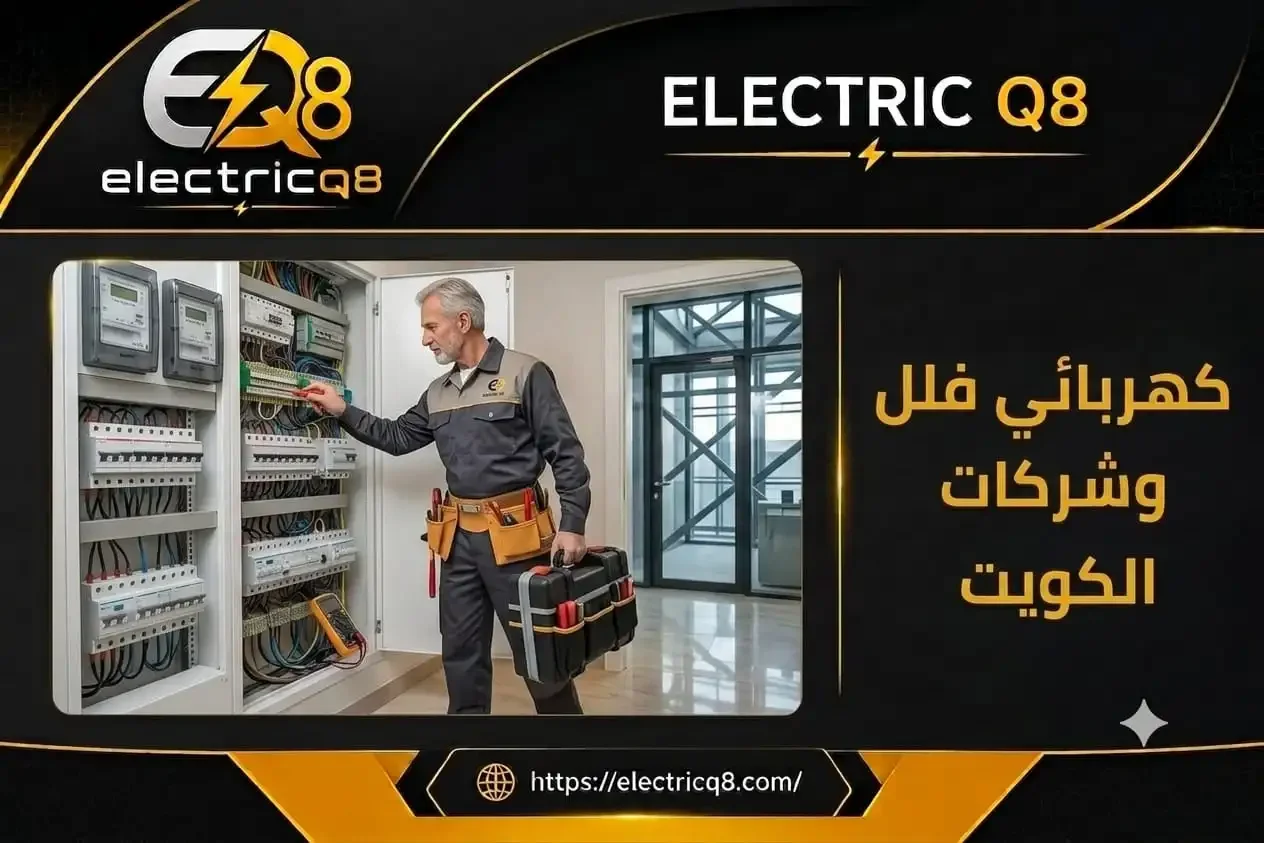
Electrical work for villas and commercial properties differs significantly from standard residential electrical services because these buildings depend on more complex electrical systems, higher operating loads, and advanced installations that require careful planning, professional execution, and continuous maintenance to ensure stable electrical performance and maximum safety. These services include electrical network installation, power distribution systems, lighting installations, air conditioning supply, elevators, pumps, surveillance systems, safety equipment, preventive maintenance, and emergency fault repairs. For this reason, villa owners, companies, commercial facilities, and investment properties throughout Kuwait rely on experienced electrical specialists capable of managing large-scale electrical projects while complying with modern engineering standards that guarantee quality, reliability, and long-term operational safety.
Villa Electrician Kuwait
Working as a Villa Electrician Kuwait requires extensive technical expertise because modern villas contain numerous electrical systems operating simultaneously. These include central air conditioning systems, swimming pools, residential elevators, surveillance cameras, indoor and outdoor lighting, smart home automation, electric gates, entertainment systems, security devices, and many high-power electrical appliances. Every electrical installation therefore begins with a detailed review of architectural and electrical drawings before any construction work starts.
Professional electricians calculate electrical loads for every section of the villa individually before distributing circuits in a balanced manner that prevents excessive loading on any single electrical line. Cable sizes, distribution panels, protective devices, and circuit breakers are carefully selected according to actual operating requirements while leaving sufficient capacity for future expansion without requiring complete reconstruction of the electrical infrastructure. Wiring routes inside walls and ceilings are organized systematically to simplify future maintenance while protecting cables from environmental factors that could reduce their service life.
Upon completion of installation, comprehensive electrical testing verifies voltage stability, insulation resistance, grounding effectiveness, circuit breaker operation, and overall system performance under actual operating conditions. Practical experience consistently demonstrates that careful planning and professional execution significantly reduce future electrical failures while providing villa owners with a flexible electrical system capable of supporting future upgrades, renovations, and additional electrical equipment without major modifications.
Company Electrician Kuwait
The responsibilities of a Company Electrician Kuwait differ considerably from residential electrical work because commercial facilities depend upon uninterrupted electrical operation throughout extended business hours. Offices, administrative buildings, and corporate facilities require highly reliable electrical systems capable of supporting computers, communication networks, servers, conference rooms, lighting systems, air conditioning equipment, surveillance systems, and numerous electronic devices simultaneously without interruptions that could affect business productivity.
Professional electricians therefore begin by evaluating the company's operational requirements, workforce size, equipment inventory, and anticipated electrical demand before designing electrical circuits specifically tailored to the organization's daily activities. Dedicated electrical circuits are frequently installed for servers, communication systems, computer equipment, conference facilities, and other sensitive electronic devices to prevent interference between critical electrical systems. Modern distribution panels are selected with sufficient expansion capacity to accommodate future business growth while maintaining organized circuit layouts that simplify maintenance.
Following installation, electricians perform comprehensive operational testing under actual business conditions to verify stable voltage levels, balanced electrical loads, reliable power distribution, and proper protective device operation. Detailed electrical documentation identifying circuit arrangements, breaker locations, and distribution panel configurations is also prepared to simplify future maintenance and system expansion. This professional approach minimizes unexpected electrical interruptions while protecting valuable electronic equipment and supporting continuous business operations.
Residential Complex Electrician
A Residential Complex Electrician manages electrical projects that involve multiple residential units sharing centralized electrical infrastructure, making these projects considerably more complex than individual homes or villas. Residential compounds require electrical systems capable of supplying apartments, shared lighting, elevators, water pumps, fire protection systems, surveillance cameras, entrance gates, parking facilities, recreational areas, and numerous additional common services. Any design or installation error therefore has the potential to affect a large number of residents simultaneously.
Professional electricians begin by calculating the total electrical demand for the entire development before dividing electrical loads among multiple main and sub-distribution panels while maintaining balanced load distribution throughout the property. Primary cable routes are designed for efficient maintenance access while utilizing durable electrical materials capable of supporting continuous long-term operation under demanding conditions.
Comprehensive testing is conducted before project completion to verify the operation of main breakers, protective devices, grounding systems, residual current protection, voltage stability, and complete electrical coordination throughout the complex. Detailed technical documentation identifying circuit layouts, cable routing, distribution panels, and protective systems is prepared to support future maintenance activities while reducing response time whenever electrical repairs become necessary. Proper planning and professional execution therefore contribute directly to the long-term safety, efficiency, and reliability of residential electrical infrastructure.
Commercial Building Electrician Kuwait
A Commercial Building Electrician Kuwait performs specialized electrical work that requires advanced planning and engineering expertise because commercial buildings operate continuously throughout business hours while supporting electrical systems that differ significantly from residential properties. Commercial facilities typically include central air conditioning systems, elevators, escalators, commercial lighting, illuminated advertising displays, computer networks, data servers, surveillance equipment, point-of-sale systems, security installations, fire protection equipment, and numerous other electrical systems requiring uninterrupted power.
Professional electricians begin by studying the building's intended commercial activity, total floor area, occupancy levels, and anticipated electrical demand before designing distribution systems capable of supplying every department safely and efficiently. Dedicated electrical circuits are allocated to sensitive equipment while allowing sufficient capacity for future expansion without requiring complete reconstruction of the electrical infrastructure. Distribution panels, protective devices, cable routes, and electrical installations are selected according to actual operating conditions rather than minimum design requirements.
Before project completion, comprehensive testing verifies voltage stability, load distribution, protective device performance, grounding effectiveness, and reliable electrical operation throughout the building. Because electrical interruptions within commercial facilities may result in operational downtime and financial losses, careful planning and professional installation remain essential for ensuring long-term business continuity and dependable electrical performance.
Villa Electrical Maintenance
Villa Electrical Maintenance follows a preventive approach designed to preserve long-term system reliability because modern villas contain numerous interconnected electrical systems operating simultaneously. Routine maintenance begins with inspection of main and sub-distribution panels, followed by evaluation of circuit breakers, measurement of electrical loads, and thermal imaging inspections capable of identifying abnormal temperature increases within electrical panels and cable connections before visible failures occur.
Additional inspections include central air conditioning supplies, pump circuits, outdoor lighting systems, smart home installations, surveillance equipment, and concealed wiring to verify insulation integrity and identify early signs of deterioration. Practical experience frequently demonstrates that routine maintenance discovers relatively minor issues such as loose electrical terminals or overloaded circuits before they develop into expensive repairs or complete system failures.
After completing all inspections, electricians conduct comprehensive operational testing throughout the villa while preparing detailed technical reports describing system condition together with recommendations regarding repairs, upgrades, or component replacement where necessary. Preventive maintenance therefore improves electrical safety, enhances energy efficiency, extends equipment lifespan, and significantly reduces unexpected electrical failures.
Corporate Electrical Services
Corporate Electrical Services include a comprehensive range of professional solutions designed to establish, maintain, and upgrade electrical systems within offices, administrative facilities, commercial organizations, industrial companies, and service institutions. Every project begins by evaluating the organization's operational requirements, staffing levels, equipment usage, and future expansion plans before designing an electrical distribution system capable of providing balanced, reliable power throughout the facility.
Services include office electrical installations, conference room power systems, server room electrical infrastructure, indoor and outdoor lighting, dedicated circuits for sensitive electronic equipment, grounding systems, protective devices, and complete electrical distribution networks. Electricians also install residual current protection devices, main breakers, surge protection systems, and grounding arrangements that comply with recognized electrical safety standards while protecting both employees and valuable equipment.
Once installation has been completed, comprehensive testing verifies electrical stability, protective device operation, circuit performance, and complete compliance with design specifications. Preventive maintenance programs are then established to monitor system performance continuously while identifying developing problems before they interrupt business operations. This systematic approach provides companies with dependable electrical infrastructure capable of supporting continuous productivity while minimizing maintenance costs and operational disruptions.
Office Electrical Installations
Office Electrical Installations require a completely different planning approach than residential electrical work because modern workplaces depend on large numbers of computers, printers, servers, communication systems, conference equipment, surveillance devices, access control systems, and other technology that must operate continuously without interruption. Professional electricians therefore begin by studying the office layout, workstation locations, meeting rooms, reception areas, server rooms, storage spaces, and future expansion requirements before preparing an electrical distribution plan specifically tailored to the business environment.
Electrical circuits are designed so that every department receives sufficient power according to its operational requirements while maintaining balanced load distribution throughout the office. Power outlets are positioned strategically to eliminate unnecessary extension cords and reduce the risk of overloaded circuits. Dedicated electrical circuits are normally installed for servers, network equipment, communication systems, and other mission-critical devices that require uninterrupted and stable electrical supply. Lighting circuits are separated from equipment circuits whenever appropriate to improve operational reliability and simplify maintenance procedures.
Following installation, electricians perform extensive testing of every outlet, circuit, breaker, and distribution panel while monitoring voltage stability under full operational load. Electrical performance is evaluated with computers, office equipment, lighting systems, and communication devices operating simultaneously to confirm reliable service during daily business activities. Properly designed office electrical installations improve workplace productivity, protect sensitive electronic equipment, simplify future expansion, and significantly reduce unexpected electrical interruptions.
Project Electrician Kuwait
A Project Electrician Kuwait manages electrical installations across a wide variety of construction projects, including villas, residential developments, office buildings, commercial facilities, hospitals, schools, industrial plants, warehouses, and investment properties. This role requires extensive technical knowledge together with the ability to interpret engineering drawings, coordinate with multiple construction disciplines, and maintain strict project schedules without compromising installation quality or electrical safety.
Every project begins with a complete review of architectural, structural, and electrical drawings before calculating anticipated electrical loads, selecting appropriate cable sizes, determining protective device ratings, and planning distribution panel locations. Electrical conduit systems, cable routing, distribution panels, lighting installations, power outlets, mechanical equipment supplies, and specialized electrical systems are then installed according to detailed engineering specifications while remaining fully coordinated with plumbing, air conditioning, fire protection, and interior finishing work.
Installation progresses through carefully planned construction phases, beginning with conduit installation, followed by cable pulling, distribution panel installation, lighting systems, electrical accessories, equipment connections, and final commissioning. Comprehensive inspections and technical testing are performed after every major construction phase to verify compliance with project specifications before work proceeds to subsequent stages. Any modifications made during construction are documented carefully to produce accurate as-built drawings that simplify future maintenance and facility management.
Practical experience consistently demonstrates that successful electrical projects depend as much upon careful planning and technical coordination as they do upon installation quality itself. Addressing design issues during early construction phases is considerably more efficient and economical than correcting electrical deficiencies after architectural finishes have been completed. Experienced project electricians therefore contribute directly to project quality, long-term reliability, and efficient building operation.
Villa Electrical Contractor
A Villa Electrical Contractor provides comprehensive project management rather than simply supplying electricians or installing electrical wiring. Professional contractors supervise every stage of the electrical project from initial design review through final commissioning while coordinating closely with architects, consulting engineers, interior designers, air conditioning contractors, plumbing specialists, and other construction professionals to ensure smooth project execution without scheduling conflicts.
The contractor develops detailed project schedules, procures approved electrical materials, supervises installation teams, monitors construction quality, and verifies compliance with engineering specifications throughout every stage of the project. Cable installations, distribution panels, lighting systems, grounding arrangements, protective devices, electrical accessories, and specialized equipment are all inspected continuously to ensure that workmanship satisfies the highest professional standards before construction progresses.
Quality control remains a primary responsibility throughout the project. Every installation stage undergoes detailed inspection before approval, allowing deficiencies to be corrected immediately while maintaining construction schedules. Upon completion, electricians perform comprehensive operational testing of distribution panels, circuit breakers, lighting systems, electrical outlets, protective devices, grounding systems, and every major electrical installation throughout the villa.
Homeowners also receive complete technical documentation including electrical drawings, circuit identification schedules, inspection reports, testing records, and maintenance recommendations that simplify future servicing, renovation projects, and electrical expansion. This comprehensive management approach results in an electrical installation characterized by exceptional quality, long-term reliability, simplified maintenance, and complete compliance with modern engineering standards.
Commercial Electrical Services Kuwait
Commercial Electrical Services Kuwait encompass every electrical solution required by businesses, shopping centers, office buildings, retail stores, warehouses, investment properties, and commercial developments seeking dependable, efficient, and scalable electrical infrastructure. These services extend far beyond initial installation by including preventive maintenance, electrical upgrades, system modernization, load redistribution, troubleshooting, emergency repairs, and ongoing technical support throughout the operational life of the facility.
Professional commercial electrical services begin with detailed evaluation of the organization's activities, operating hours, equipment inventory, expansion plans, and overall electrical demand before recommending solutions that maximize operational efficiency while maintaining the highest safety standards. Services frequently include new electrical installations, distribution panel upgrades, lighting modernization, circuit breaker maintenance, cable inspections, electrical testing, office expansion wiring, equipment relocation, and electrical infrastructure improvements designed to accommodate business growth.
Advanced diagnostic instruments are used regularly to monitor electrical performance, identify developing problems, evaluate load balance, inspect thermal conditions within distribution panels, and detect deteriorating electrical components before they result in unexpected system failures. This proactive maintenance strategy minimizes operational downtime while protecting valuable business equipment from electrical disturbances.
Following every installation, maintenance project, or electrical upgrade, comprehensive testing verifies voltage stability, load distribution, protective device operation, grounding effectiveness, and complete system reliability under actual operating conditions. Detailed technical reports provide property owners and facility managers with a clear understanding of system condition together with recommendations for future maintenance and expansion. By combining preventive maintenance with professional engineering practices, commercial electrical services provide organizations throughout Kuwait with dependable electrical infrastructure capable of supporting uninterrupted business operations while reducing long-term maintenance costs and maximizing electrical system reliability.
Conclusion
Electrical work for villas, companies, commercial buildings, residential complexes, and large projects requires a completely different level of planning, engineering knowledge, and practical experience compared with standard residential electrical services. These facilities depend on sophisticated electrical infrastructure capable of supporting high electrical loads, continuous operation, advanced automation systems, security equipment, communication networks, central air conditioning, elevators, pumps, and numerous other systems that must operate together safely and efficiently. Every stage of the project, beginning with electrical design and load calculations through cable installation, distribution panels, commissioning, and preventive maintenance, directly influences the long-term reliability and performance of the entire electrical system.
As modern buildings continue incorporating smart technologies, energy-efficient equipment, surveillance systems, access control, electric vehicle charging stations, intelligent lighting, and advanced automation platforms, electrical infrastructure must be designed with sufficient flexibility to accommodate future expansion without requiring extensive reconstruction. Accurate electrical load calculations, careful selection of cables and protective devices, balanced circuit distribution, and properly engineered distribution panels create an electrical network capable of supporting future technological developments while maintaining outstanding operational stability.
The role of an experienced electrical specialist extends well beyond completing new installations. Preventive maintenance, periodic inspections, electrical upgrades, thermal analysis, load balancing, and early fault detection all contribute significantly to maintaining uninterrupted business operations, protecting valuable equipment, preserving property safety, and extending the service life of the electrical infrastructure. Modern diagnostic equipment enables electricians to identify developing electrical problems before visible failures occur, reducing unexpected downtime while minimizing long-term repair expenses.
Ultimately, selecting an experienced electrician specializing in villas, commercial properties, and large-scale projects represents a long-term investment in construction quality, operational safety, and dependable performance. Professionally engineered electrical systems not only provide reliable power distribution but also offer property owners confidence that every component has been designed, installed, tested, and maintained according to the highest engineering and electrical safety standards while remaining fully prepared for future expansion and technological advancement.
Frequently Asked Questions
How does electrical work in villas differ from standard residential electrical installations?
Villa electrical systems normally include significantly more equipment than ordinary homes, including central air conditioning, swimming pools, elevators, outdoor lighting, smart home systems, security installations, entertainment systems, and advanced automation. These additional systems require more sophisticated electrical design, larger electrical loads, advanced distribution panels, and more comprehensive protection systems.
Do companies require routine electrical maintenance?
Yes. Commercial organizations rely on continuous operation of computers, communication equipment, servers, lighting, air conditioning, production systems, and other electrical infrastructure. Regular preventive maintenance identifies developing electrical problems before they interrupt business operations, improves electrical reliability, and protects valuable electronic equipment from unexpected failures.
When should the electrical system of a villa or commercial property be upgraded?
Electrical upgrades are generally recommended whenever electrical demand increases significantly, new high-power equipment is installed, recurring electrical faults develop, business expansion occurs, or professional inspections determine that existing panels, circuit breakers, wiring, or distribution systems no longer satisfy current operational requirements or modern electrical safety standards.
Why are dedicated electrical circuits installed for certain commercial equipment?
Critical equipment such as servers, communication systems, network infrastructure, security control rooms, medical equipment, and specialized industrial machinery often require independent electrical circuits to ensure stable voltage, minimize electrical interference, and prevent unrelated electrical faults elsewhere in the building from affecting essential operations.
How should I choose the right electrician for a villa or commercial project?
The ideal electrician should possess extensive experience with similar large-scale projects, demonstrate strong knowledge of electrical load calculations, comply fully with recognized engineering standards, utilize approved electrical materials, perform comprehensive testing before project completion, provide detailed technical documentation, and offer reliable preventive maintenance and technical support after installation.
Categories
Company Electrician Kuwait
0 services
Office Electrician Kuwait
0 services
Shop Electrician Kuwait
0 services
Warehouse Electrician Kuwait
0 services
Factory Electrician Kuwait
0 services
Company Electrical Maintenance Kuwait
0 services
Commercial Electrical Wiring Kuwait
0 services
Industrial Electrical Panels Kuwait
0 services
Commercial Complex Maintenance Kuwait
0 services
Electrical Maintenance Contracts Companies Kuwait
0 services