
If your shop lighting works normally for most of the day but starts tripping during busy periods or when certain equipment is switched on, the timing of the fault is important. The problem is not necessarily in the lamps themselves because the shutdown may be related to the lighting circuit load, the way loads are distributed, or a fault that appears after continued operation. Proper diagnosis starts by comparing what was operating when the lighting went out, identifying the affected breaker, determining which equipment and lighting are actually connected to the circuit, and carrying out appropriate measurements by a qualified electrician. Repeatedly resetting the breaker without finding out why it trips is not a repair, and installing a larger breaker is not a proper solution to an overloaded circuit. The objective is to identify why the protection operates during peak periods and then correct the cause according to the actual circuit design and electrical installation.
Shop Lighting Trips During Peak Hours
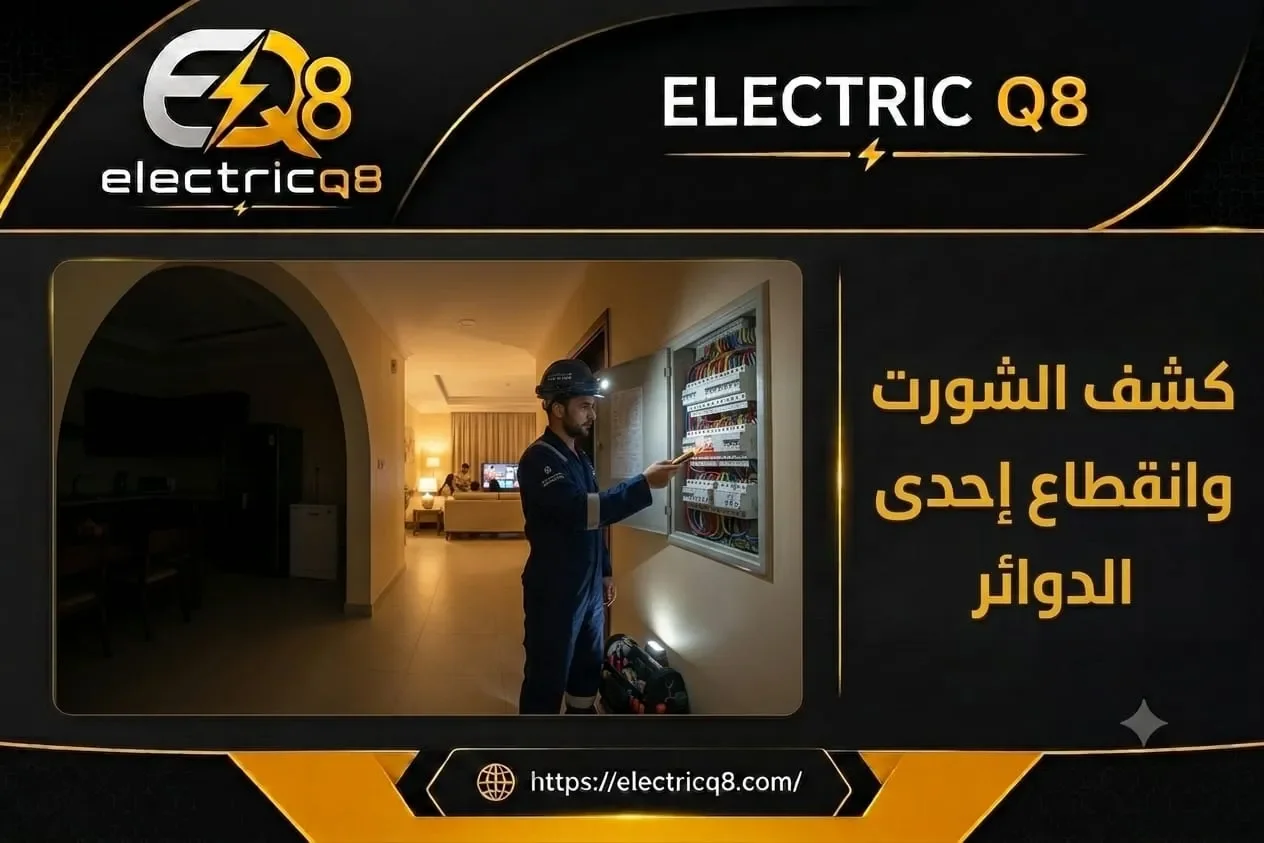
When shop lighting trips during peak hours but operates normally during quieter periods, that information alone gives the inspection an important direction. Operating conditions usually change during peak hours because all lighting may be switched on while additional equipment, display systems, or other appliances related to the business are also operating. The first question therefore should not be “which lamp is faulty?” but rather “what exactly was operating immediately before the lighting went out?” because the relationship between the trip and the active loads may reveal a pattern that does not appear during normal low-demand periods.
Consider a practical example of a shop that opens in the morning using only part of its lighting and later switches on the remaining lights, storefront lighting, and additional equipment as customer activity increases. If the circuit trips only after the shop reaches this full operating condition, the electrician needs to establish whether the lighting circuit is actually independent from other equipment or whether additional loads share part of the existing installation. The circuit label or the physical location of the lamps should not be treated as proof of how the system is wired before the actual circuit is traced.
The timing of the trip is also important. A breaker that operates immediately when a particular load is switched on presents a different diagnostic pattern from a breaker that trips after the shop has been operating for some time. This difference helps determine the direction of testing, but it does not provide a final diagnosis without measurements and inspection. Breaker condition, connections, conductors, actual loads, and installation conditions all need to be considered.
One of the biggest mistakes is repeatedly resetting the breaker so the shop can continue operating. When a protective device trips, the reason needs to be identified. If the problem is accompanied by severe heat, a burning smell, discoloration, or unusual sounds from the electrical panel, stop using the affected system safely and request qualified electrical inspection rather than repeatedly restoring power.
-
Recording which equipment and lighting groups were operating when the trip occurred helps compare peak operating conditions with quieter periods and gives the electrician a more useful starting point than checking individual lamps without understanding the fault pattern
-
A trip that happens immediately when a particular piece of equipment starts is different from one that occurs after the shop has operated for a period of time which makes the timing of the problem diagnostically important although load measurements and circuit inspection are still required
-
Repeatedly resetting a breaker is not a repair because the protective device is operating in response to particular electrical conditions and recurring trips need investigation especially when severe heat a burning smell or discoloration appears around panel components
Shop Lighting Suddenly Goes Out
When shop lighting suddenly goes out, the first step is to distinguish between one lighting group switching off and the entire shop lighting system going dark. If one row of fixtures stops while the rest remain operational, the inspection follows a different path from a situation where everything supplied by one circuit stops at the same time. Similarly, if the lighting goes out but no breaker appears to have tripped, that is important information because not every sudden lighting failure is caused by an overload or a tripped breaker.
Accurate observations before the electrician arrives can save considerable diagnostic time. Did the storefront lighting go out together with the internal lighting? Did electrical outlets or other equipment stop at the same moment? Did the lighting return automatically or did someone have to restore it? Does the problem repeatedly occur after approximately the same amount of operating time? These details help define the boundaries of the affected system instead of immediately replacing lamps or breakers based on assumptions.
In some shops, the fault may involve one lighting group or a control component rather than the complete circuit. In other situations, inspection may reveal that loads not expected to be part of the lighting system share the same electrical path or that previous modifications changed the load distribution from the arrangement originally expected. For this reason, the phrase “sudden shutdown” should not automatically be interpreted as proof of an overload before identifying what actually stopped operating.
A common mistake is replacing the breaker immediately because it is the most visible component associated with the shutdown. The breaker may have operated correctly because of a problem elsewhere in the circuit rather than being the cause itself. If the breaker did not trip at all, focusing on it first can move the diagnosis away from the real fault. A proper inspection follows the supply to the affected section and compares conditions before and after the failure.
-
Determining whether the shutdown affected all shop lighting one lighting group or only the storefront helps narrow down the affected circuit and prevents every sudden lighting failure from being treated as the same fault with one fixed cause
-
Checking the breaker condition after the lights go out is important because lighting failure while the breaker remains in its operating position requires a different diagnostic approach from a situation where a protective device has actually tripped
-
Replacing lamps or breakers based on assumptions can temporarily change the symptoms without correcting the cause which is why the affected section its supply and the condition of the controls should be identified before components are replaced
Breaker Trips the Shop Lighting
If a breaker trips the shop lighting, the objective is to determine why it operated rather than immediately searching for a “stronger” breaker. A breaker forms part of a protective system and should be selected in coordination with the circuit, conductors, load, and design conditions. Increasing its rating simply to prevent trips can remove the visible warning without correcting the underlying cause and may expose conductors or other components to conditions they were not designed for.
The first technical step is identifying the breaker that trips and establishing what it actually supplies. A panel label such as “lighting” is not enough if the shop has been modified over the years. Tracing the circuit helps determine which lighting groups and any additional loads are connected to it. The load can then be measured under the operating conditions in which the fault occurs and compared with the circuit design and component specifications.
The condition of the breaker itself is also part of the inspection, but it should not be judged only by its age or by the fact that it trips repeatedly. The electrician should review connections, evidence of overheating, terminal condition, and circuit behavior before deciding whether the breaker is responding correctly to conditions elsewhere in the circuit or whether the component itself requires further assessment. This is where measurement becomes more useful than trial-and-error replacement.
If the shop has added storefront lighting, decorative fixtures, or new equipment over time, this history is relevant even when the fault did not appear immediately after the modification. Accumulated changes can alter the actual operating condition of a circuit compared with its previous design. Depending on the diagnosis, the solution may involve reorganizing loads, correcting a fault, or modifying the installation according to an appropriate design rather than simply replacing the breaker.
-
A breaker that repeatedly trips should not be replaced with a higher rated device simply to stop the interruption because protective device selection is coordinated with conductors load and circuit design and changing its rating requires a complete electrical assessment
-
The circuit description written on the shop panel does not prove that the breaker supplies lighting only especially after previous modifications which is why tracing the actual connected loads is important before calculating demand or determining the cause of the trip
-
Breaker assessment includes connections signs of overheating circuit behavior and electrical measurements because repeated operation may be the correct response to a problem elsewhere in the circuit and the breaker should not be replaced before the cause is established
Overload on the Shop Lighting Circuit
An overload on the shop lighting circuit cannot be confirmed simply by looking at the number of lamps or by noticing that the breaker trips repeatedly. The actual load has to be considered together with the equipment connected to the circuit, its operating pattern, the protective device, conductors, and the original electrical design. This is particularly important in shops that have undergone several modifications because a circuit originally intended for a defined lighting group may later have had storefront lighting, decorative fixtures, or other equipment added without a complete review of the electrical distribution.
It is also important to distinguish between the nominal wattage printed on lighting fixtures and a complete electrical assessment of the circuit. Adding the wattage figures can provide basic information, but it does not replace understanding the load type, operating characteristics, connections, actual measurements, and applicable design requirements. A shop owner should therefore not add up lamp wattages and independently conclude that the breaker is too small and needs a higher rating.
In a practical scenario, a shop may operate reliably when only half of its lighting is in use but begin tripping after the storefront and all display lighting have been operating for some time. This pattern gives the electrician a reason to measure the operating condition associated with the fault and compare it with normal operation. If the investigation establishes that load distribution is part of the problem, the solution should be based on the available electrical installation and circuit design rather than finding a way to stop the breaker from operating.
An overload is also not the only possible reason for overheating or tripping. Poor connections, affected components, and other electrical faults can produce similar symptoms. Measurements and inspection are therefore required before a repair is selected. If severe heat, blackening, or a burning smell appears, the circuit should not remain in operation simply to collect more information.
-
Confirming an overload requires identifying the loads actually connected to the circuit and measuring their behavior under the operating conditions associated with the trip because the number of lighting fixtures or their combined nameplate wattage does not provide a complete diagnosis
-
Storefront lighting decorative lighting and display units added over time should be reviewed because the present use of the circuit may be significantly different from the purpose for which it was originally installed
-
Overheating or tripping should not automatically be attributed to overload because connection problems damaged components and other circuit faults can produce similar symptoms which is why diagnosis should come before changes to protection or load distribution
Shop Lighting Trips During Operation

When shop lighting trips during operation after the business has been open for a period of time rather than immediately after the lights are switched on, the duration of operation becomes an important part of the fault description. A trip occurring after tens of minutes or several hours creates a different diagnostic pattern from one that happens immediately when a switch is operated. This distinction helps the electrician determine the conditions under which the circuit should be evaluated instead of performing a brief test while the shop is operating at minimal load and concluding that everything is normal.
Intermittent faults require accurate information. It is useful to record when the lighting was switched on, approximately how long it operated before the trip, which equipment was running, and whether anything changed immediately before the fault. If the lighting repeatedly trips after full lighting and particular equipment have been operating together, that relationship deserves investigation. If the fault occurs at inconsistent times without a clear pattern, the inspection may need to consider a wider range of possibilities.
A brief test may not be enough when the reported problem appears only after extended operation. The electrician may need to assess load, thermal condition, and connections under appropriate and safe operating conditions so the measurements can be compared with the circumstances described by the shop owner. The purpose is not to force the breaker to trip but to gather useful measurements and observations without unnecessarily stressing the circuit.
If the lighting returns after a period and then trips again later, the temporary return should not be treated as evidence that the problem has disappeared. A recurring fault needs its cause identified because a system that appears stable when cool or lightly loaded may still behave differently under the conditions associated with the shutdown.
-
The length of time the lighting operates before tripping is diagnostically useful because a fault that appears after continued operation requires a different assessment from one that occurs immediately when a switch or breaker is operated
-
Recording the time of the problem the active loads and any changes immediately before the trip gives the electrician a pattern that can be compared with measurements instead of trying to reproduce the fault randomly during a short service visit
-
Lighting returning after a period does not mean the underlying cause has disappeared because some problems only become visible under particular operating conditions which is why the circuit should be assessed in relation to the conditions associated with the fault
Lighting Trips When Shop Equipment Starts
Lighting tripping when shop equipment starts provides a clear timing relationship that needs investigation, but it does not automatically mean the equipment itself is faulty. If the lighting trips every time a particular machine or group of equipment starts, the first question is how that equipment is electrically related to the lighting circuit or panel and what changes in the system at the moment it is switched on.
Circuit tracing may reveal that the equipment and lighting share part of the electrical installation or that starting the equipment changes the load condition in a way that requires assessment. In another case, the problem may exist on a different circuit but appear at the same time because of an electrical issue requiring broader measurements. The timing relationship is therefore valuable evidence but not a final judgment that the equipment itself has failed.
One mistake is permanently avoiding the use of essential equipment and treating the issue as solved simply because the lighting no longer trips. That only avoids the symptom rather than repairing the electrical installation. The opposite mistake is randomly moving the equipment to another outlet to see whether the lighting still trips because the user may not know which circuit supplies the alternative outlet and could simply move the problem elsewhere.
The electrician needs to know what equipment was operating when the fault occurred and whether anything new was added to the shop before reviewing the affected circuit and load distribution. If the current operating arrangement is shown to require modification, the change should be designed around the circuits, panel, conductors, and protection rather than temporary extensions or improvised connections.
-
Lighting that repeatedly trips at the exact moment a particular piece of equipment starts creates an important relationship to investigate but does not by itself prove that the equipment is defective because the electrical relationship between the equipment circuit and lighting circuit needs to be traced and measured
-
Randomly moving equipment to another outlet is not an appropriate diagnostic test because the user usually does not know which circuit supplies the alternative point and the problem may simply be transferred to another circuit rather than properly identified
-
If normal shop operation requires both lighting and equipment to run together the solution should be based on evaluating the electrical installation for the required operating condition rather than permanently disabling an essential part of the business to prevent the visible symptom
Repairing a Shop Lighting Circuit
Repairing a shop lighting circuit begins after diagnosis rather than before it because the word “repair” can describe completely different work depending on the cause. In one situation, the required work may involve correcting an affected connection. In another, it may involve reorganizing loads, replacing a component shown to have a problem, or modifying part of the installation in accordance with an appropriate electrical design.
Before repair begins, the circuit scope needs to be established. Which lighting fixtures does it supply? Are other loads connected to it? Which breaker and protection devices are associated with the circuit? Have previous modifications been made? Once this information is combined with appropriate measurements, the repair decision can be based on the actual condition instead of replacing components experimentally.
A proper repair also does not end simply because the lights come back on. If the original problem occurred during peak operating conditions, the circuit should be verified after the repair under appropriate operating conditions to confirm that the cause of the trip has been addressed. Switching on one row of lamps for a minute is not an adequate verification for a fault that previously appeared only when the shop was operating more fully.
Repair cost cannot be determined accurately from the statement “the lighting keeps tripping.” Correcting one affected connection is different from reorganizing a circuit or installing a new route if the diagnosis shows that such work is required. Clear diagnosis and a defined scope therefore come before accurate pricing rather than applying one standard price to every shop lighting fault.
-
Lighting circuit repair should follow the cause established by inspection because correcting an affected connection differs from redistributing loads replacing a component or modifying the electrical installation and each situation requires a different work scope
-
Restoring illumination is not the only test of a successful repair because a fault associated with peak operating conditions needs verification under conditions reasonably related to those that originally caused the circuit to trip
-
Repair cost depends on the location and nature of the fault and the extent of the required modification which is why a clear diagnosis helps prevent the shop owner from paying for component replacements that are unrelated to the actual cause
Checking the Shop Lighting Load
Checking the shop lighting load is not simply an arithmetic exercise based on the power rating printed on each lamp. A professional assessment considers the circuit as a system containing loads, conductors, protection, connections, and operating conditions. The objective is to understand what is actually happening when the fault occurs and whether the measured condition is consistent with the circuit design and its components.
The inspection starts by identifying everything the circuit actually supplies rather than relying only on the breaker label. The electrician then needs to understand both the normal operating condition and the peak operating condition. If the shop switches on additional storefront and display lighting in the evening, for example, that condition should form part of the assessment because it represents the operating state associated with the fault rather than the quieter morning condition.
Measurements should also be performed using suitable instruments by a qualified person. The shop owner does not need to open the electrical panel, attempt to measure current independently, or touch conductors to determine the load. Electrical panels can contain hazardous energized parts and require appropriate procedures, equipment, and technical knowledge.
After the information and measurements are collected, the results can be compared with the circuit design, conductor characteristics, protection, and applicable project requirements. This is what determines whether the required action involves correcting a fault, reorganizing loads, or carrying out a properly designed modification. The measurement should lead to the decision rather than a predetermined repair being used to interpret the measurements.
-
Load assessment begins by identifying every load actually connected to the circuit because relying only on the breaker label or assuming that the circuit supplies lighting alone can produce an incorrect conclusion when previous additions have been made
-
Peak operating conditions should be included in the assessment when the fault appears during those periods because measuring the circuit while only part of the shop lighting and equipment is operating does not represent the conditions associated with the trip
-
Measuring electrical loads inside a panel is specialist electrical work and should not be attempted by the shop owner for diagnostic purposes because access to energized components requires appropriate instruments safety procedures and professional competence
Shop Lighting Electrician in Kuwait

Choosing a shop lighting electrician in Kuwait for a recurring trip should be based on diagnostic ability rather than how quickly someone can replace the breaker. A suitable electrician asks when the lighting trips, what equipment is operating at the time, which part of the lighting goes out, whether the breaker itself operates, and whether new equipment or lighting was added before the problem began.
These questions help distinguish an electrician who is investigating the cause from someone who begins with one component. If the first proposal is to install a higher-rated breaker without assessing the conductors, circuit, and load, that is not an appropriate response to the problem. Protective device ratings form part of a coordinated electrical design and should not be changed simply because interruptions are inconvenient for the business.
It is also useful for the electrician to explain what was found before repair begins. Is the issue related to circuit loading? Is there an affected connection? Are unexpected loads sharing the circuit? Explaining the cause and work scope provides greater transparency than replacing several parts without explaining why each one is necessary.
When comparing service quotations, the important question is what each price actually includes. Is it inspection only or inspection and repair? Are replacement parts included? Does the work involve changing wiring routes or circuits? Clear details make comparisons more meaningful and prevent a lower-looking price from being mistaken for the same service when it actually covers less work.
-
A suitable electrician begins by asking about trip timing active loads and breaker condition because the fault pattern provides essential information before the electrical panel is inspected or replacement components are proposed
-
Recommending a higher-rated breaker before assessing the circuit conductors and load is not an appropriate professional solution because protection is coordinated with the electrical design and should not be used simply as a way to prevent recurring trips
-
A service quotation becomes more useful when inspection repair replacement parts and required modifications are clearly identified because comparing two prices without knowing their work scopes can give a misleading impression of the actual cost
Shop Lighting Repair in Kuwait
Shop lighting repair in Kuwait for a fault that appears during peak hours should focus on restoring reliable operation rather than simply bringing the lights back on as quickly as possible. If the lighting returns after the breaker is reset while the underlying cause remains, the same fault may return later that day or whenever similar operating conditions occur.
The process begins by collecting a clear description of the fault before identifying the affected circuit and operating condition. The appropriate repair can then be selected after diagnosis. In some cases, the required work may be limited. In others, the existing electrical installation may require a broader modification. The solution should not be selected before the cause is understood.
Timing is also important in a commercial environment because electrical work should be planned to reduce unnecessary disruption to the business without compromising safety procedures. This does not mean working on energized circuits simply to keep the shop operating. It means planning isolation, repair, and verification according to the work scope and the requirements of the electrical system.
A better service leaves the shop owner with a clear understanding of what caused the trip, what was changed, and how the circuit behaved after the work. That level of clarity is more valuable than a temporary solution that restores lighting without explaining why the interruption occurred.
-
Repairing lighting that fails during peak periods should focus on removing the cause of the trip rather than simply resetting the protective device because successful service should address the circuit behavior under the operating conditions that previously revealed the problem
-
Organizing the repair time matters in a commercial shop but maintaining business activity does not justify working on energized components simply to save time because safe isolation remains a fundamental part of electrical modification and repair
-
Understanding the identified cause and the work completed gives the shop owner a clearer picture of the circuit condition and helps avoid repeated temporary solutions based only on restoring power every time the same fault returns
Conclusion
If shop lighting trips during peak hours, the timing is valuable diagnostic information rather than simply an inconvenience associated with a busy period. The important questions are what was operating when the trip occurred, whether a breaker actually operated, which loads are connected to the circuit, and how the shop's electrical demand changes throughout the day. The cause may involve loading, connections, a circuit component, or the way loads are distributed, so the reason should not be assumed before appropriate inspection and measurement. Most importantly, repeatedly resetting the breaker or installing a higher-rated one is not a proper repair. Correct diagnosis connects the symptom with the operating condition, identifies the cause, and then allows the repair to be carried out according to the circuit design, conductors, and protection rather than relying on temporary solutions.
Frequently Asked Questions
Why does my shop lighting trip only during busy periods?
The shop's operating condition may change during peak periods when additional lighting groups or equipment are switched on, but timing alone cannot prove that an overload is the cause. The active loads need to be identified and the circuit should be inspected and measured under conditions related to the fault.
Should I install a higher-rated breaker if it keeps tripping?
A breaker should not be upsized simply to prevent repeated trips. Its rating is coordinated with the conductors, load, and circuit design. Any change requires technical assessment to ensure the protection remains appropriate for the electrical installation.
Does lighting tripping when equipment starts mean the equipment is faulty?
Not necessarily. The timing relationship is important, but it does not prove that the equipment itself is defective. The relationship between the equipment circuit, lighting circuit, load conditions, and electrical installation needs to be assessed.
What information should I prepare before calling an electrician?
Record when the trip occurs, which lighting and equipment were operating, which part of the shop lost lighting, the condition of the breaker afterward, and any recent electrical additions or modifications. This information can help the electrician identify the fault pattern more efficiently.
How much does peak-time shop lighting repair cost in Kuwait?
There is no fixed price because the problem may require inspection and correction of a specific connection, replacement of a component shown to be faulty, load reorganization, or modification of the circuit depending on the diagnosis. Identifying the cause and work scope first provides a more accurate basis for determining the cost.



