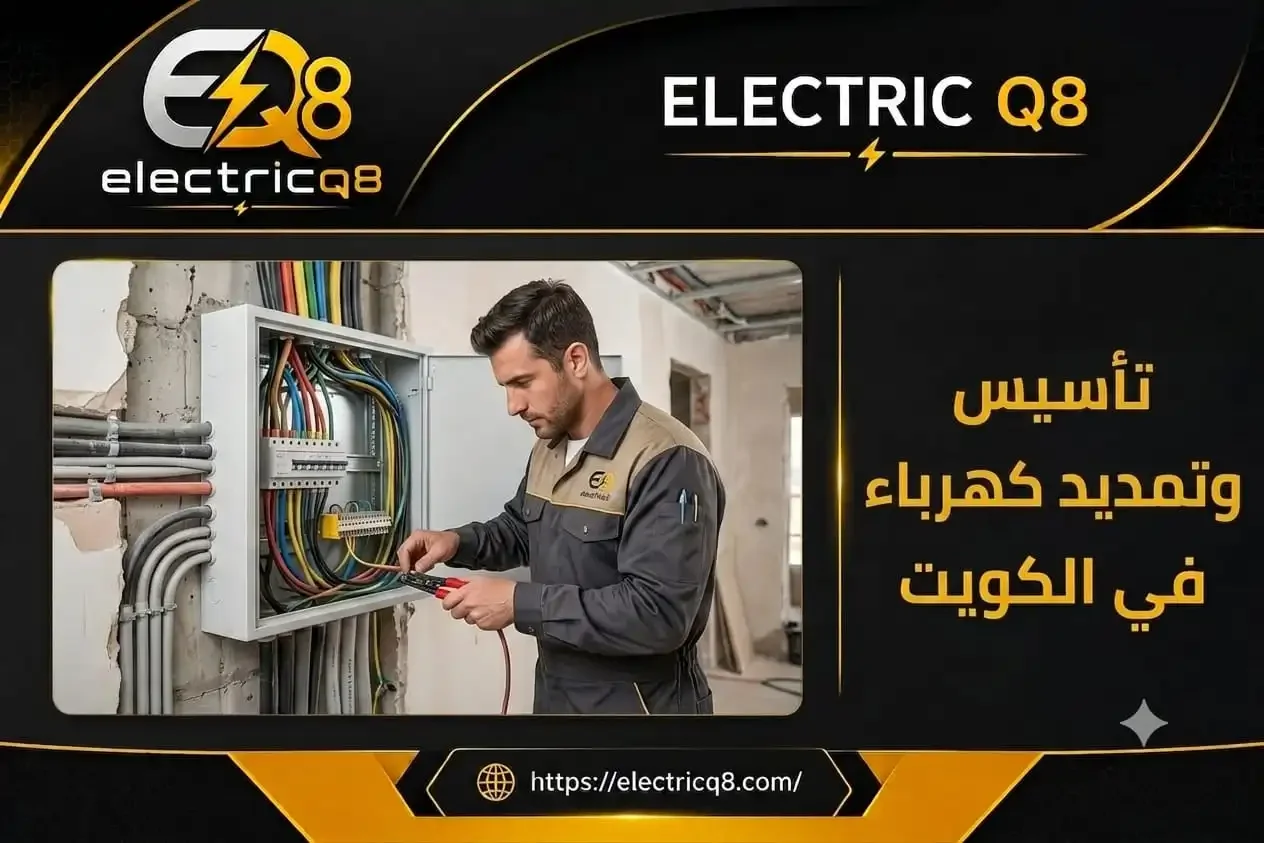
Electrical wiring installation forms the foundation of every safe and efficient building, whether it is a house, villa, apartment, commercial facility, or any other type of property. The electrical cables concealed inside walls during the construction phase are expected to serve the building for many years, which means that any mistake in planning or installation may create problems that become extremely difficult and expensive to correct after finishing work has been completed. For this reason, electrical wiring is far more than simply supplying power to switches, outlets, and appliances. It involves balancing electrical loads correctly, protecting the entire electrical system from future failures, and preparing the installation to accommodate future expansion as electrical demands continue to grow. When electrical wiring is designed and installed according to professional engineering standards and careful planning, property owners benefit from a safe, stable, and highly efficient electrical system capable of operating reliably for many years without requiring costly modifications or repeated repairs.
Electrical Wiring Installation Kuwait
The success of Electrical Wiring Installation Kuwait depends far more on careful planning before installation begins than on the physical process of pulling wires through conduits. Every decision made during the planning stage directly influences the long-term safety, efficiency, and performance of the entire electrical system. Professional electricians and electrical engineers therefore begin by reviewing architectural drawings in detail, identifying the locations of rooms, lighting fixtures, air-conditioning systems, kitchens, household appliances, and future electrical equipment before determining how electrical circuits should be distributed to maintain balanced electrical loads throughout the property. Appropriate cable sizes are selected individually for every circuit according to the anticipated electrical demand, while the number, capacity, and locations of distribution panels and circuit breakers are carefully planned to simplify future maintenance and upgrades.
During installation, electrical conduits are routed through carefully designed pathways that prevent interference with plumbing systems, air-conditioning installations, communication cables, and structural components. Additional conduit capacity is frequently included so that new electrical wiring can be installed easily if future expansions become necessary. After every conduit and cable has been installed, the walls are not immediately closed. Instead, comprehensive electrical testing is carried out to measure insulation resistance, verify conductor continuity, inspect grounding systems, and confirm that every electrical circuit complies with the approved engineering design before finishing work begins. This careful planning process produces an electrical system that remains stable, experiences significantly fewer failures, and continues operating efficiently throughout many years of daily use.
Residential Electrical Wiring Kuwait
Residential Electrical Wiring Kuwait requires a thorough understanding of how families actually use electricity every day because each home has unique electrical requirements based on its occupants, lifestyle, and appliance usage. Some houses require numerous electrical outlets throughout living areas and kitchens, while others need dedicated circuits for high-power appliances such as air conditioners, ovens, electric water heaters, or laundry equipment. Professional electricians therefore begin by studying how the property will actually be used rather than relying solely on floor area or room dimensions. The electrical system is then designed to satisfy both current electrical demands and future expansion without requiring extensive modifications after construction has been completed.
Electrical outlets and switches are positioned carefully to provide convenient daily use while reducing dependence on extension cords or multiple adaptors that may overload individual circuits. High-quality electrical conduits and insulated cables capable of withstanding Kuwait's demanding environmental conditions and elevated temperatures are selected to maximize long-term reliability. Every electrical connection is installed inside purpose-built junction boxes that allow future maintenance to be performed efficiently whenever necessary. Once all wiring work has been completed, every electrical circuit is tested independently to verify complete compliance with the approved design drawings and engineering specifications. This systematic approach significantly reduces the likelihood of electrical faults appearing after the property has been occupied while providing homeowners with a reliable electrical installation capable of supporting modern household electrical demands safely for many years.
Electrical Wiring for Villas
Electrical Wiring for Villas differs considerably from wiring smaller residential properties because villas usually contain larger floor areas, multiple stories, outdoor lighting systems, landscaped gardens, electrically operated entrance gates, surveillance systems, home elevators, smart home technologies, swimming pool equipment, and many additional electrical installations. These expanded requirements demand a far more detailed electrical design capable of distributing electrical loads efficiently across multiple main and sub-distribution panels while providing dedicated circuits for every major electrical system.
The design process begins with a comprehensive analysis of the villa's anticipated electrical consumption before electrical loads are divided strategically to prevent excessive demand from being concentrated on individual circuits. Distribution panels are positioned carefully to ensure convenient access for maintenance while additional conduits are installed to accommodate future technological upgrades without requiring demolition of finished interior surfaces. During installation, electrical cables with conductor sizes specifically selected for high-capacity loads are installed while strict attention is given to grounding systems, insulation quality, circuit protection, and compliance with recognized electrical safety standards.
Upon completion of all wiring work, comprehensive electrical testing is carried out throughout the entire installation. Voltage measurements, circuit breaker operation, insulation resistance, grounding effectiveness, and electrical load balancing are all verified before the electrical system is approved for operation. This detailed engineering approach ensures that every electrical component within the villa functions safely, efficiently, and reliably while providing sufficient capacity for future technological expansion.
Electrical Cable Installation Kuwait
The success of Electrical Cable Installation Kuwait depends first on selecting the correct type of electrical cable before considering the actual installation process because cable quality, conductor size, insulation material, and manufacturing standards all have a direct impact on the long-term performance and safety of the electrical installation. Professional electricians never use identical cable sizes throughout an entire building. Instead, every circuit receives cable specifically selected according to its anticipated electrical load, the number of connected appliances, and the total cable length required. Lighting circuits, power outlet circuits, air-conditioning systems, electric water heaters, elevators, and industrial equipment all require different conductor sizes to ensure efficient and safe operation.
Environmental conditions must also be considered carefully, particularly in Kuwait where prolonged exposure to high ambient temperatures can reduce the lifespan of inferior electrical materials. During installation, specialized cable-pulling equipment is used to draw electrical conductors through protective conduits without scratching, cutting, or weakening the outer insulation because even minor insulation damage may later develop into electrical leakage, short circuits, or insulation failure. Electricians also organize and label every cable inside distribution panels so that future maintenance, troubleshooting, or system expansion can be performed quickly and accurately.
After every cable has been installed, electrical power is not immediately applied. Comprehensive insulation resistance testing, conductor continuity verification, grounding inspections, and connection testing are carried out to confirm that every electrical circuit operates exactly as designed. This disciplined installation procedure creates an electrical system that remains dependable, minimizes unexpected failures, and delivers a significantly longer operational lifespan.
Installing New Electrical Wiring
Installing New Electrical Wiring requires long-term planning that extends well beyond a building's immediate electrical needs because the electrical infrastructure installed today should remain capable of supporting future technologies and additional electrical loads for decades. Professional planning therefore goes far beyond deciding where electrical outlets and switches should be located. Engineers evaluate anticipated electrical consumption, divide loads carefully between multiple circuits, provide dedicated electrical supplies for high-power appliances, and determine the ideal locations for main and secondary distribution panels to minimize unnecessary cable lengths while improving overall energy efficiency.
An equally important consideration involves preparing the building for future expansion. Spare conduits and additional cable pathways are frequently installed to accommodate future smart home systems, surveillance equipment, solar energy installations, electric vehicle charging stations, communication infrastructure, or other technologies that may be added later without damaging finished construction. Throughout the installation process, every stage is inspected carefully before work progresses further. Electricians verify conduit integrity, confirm correct routing, inspect mechanical supports, and ensure that every installation detail complies fully with approved engineering drawings.
Once installation has been completed, a comprehensive program of engineering tests verifies complete compliance with project specifications. Electrical routes are documented carefully to create accurate records that simplify future maintenance or expansion work. This forward-thinking approach produces an electrical installation that remains flexible, dependable, and capable of adapting to changing electrical requirements while helping property owners avoid costly modifications in the future.
Electrical Wiring Contractor Kuwait
An Electrical Wiring Contractor Kuwait performs responsibilities that extend far beyond supervising installation crews because the contractor is ultimately responsible for transforming engineering drawings into a fully operational electrical system that performs safely and efficiently throughout the building's entire service life. Work begins with a detailed review of electrical plans together with close coordination between electrical, plumbing, air-conditioning, and structural disciplines to eliminate conflicts between different building services before construction begins.
The contractor then develops a detailed execution plan covering installation stages, required materials, cable sizes, distribution panel locations, quality control procedures, and the testing schedule that will be followed before project completion. Throughout construction, every phase of installation is monitored carefully to ensure that technicians comply fully with engineering specifications and avoid unauthorized modifications that could compromise future electrical performance. Material quality is also inspected continuously, including conduits, electrical cables, circuit breakers, junction boxes, distribution panels, and every supporting component installed throughout the project.
Following completion of installation work, the contractor oversees final commissioning procedures including insulation resistance testing, conductor continuity verification, grounding inspections, distribution panel testing, electrical load balancing, and complete system performance evaluations before electrical service is officially energized. This level of professional supervision gives property owners confidence that the electrical installation has been completed according to careful engineering planning, recognized safety standards, and high-quality workmanship rather than simply focusing on construction speed.
Electrical Wiring for Buildings
Electrical Wiring for Buildings differs significantly from residential wiring because apartment buildings, commercial facilities, and mixed-use developments contain multiple units, shared services, and complex electrical systems that require a carefully engineered design to ensure stable power distribution throughout the entire property. The planning process begins with a comprehensive electrical load calculation for the whole building, determining the expected demand for every apartment, office, shop, or facility before designing the main and sub-distribution panels. This approach allows electrical loads to be divided properly while making future maintenance easier and preventing one section of the building from affecting another.
Dedicated electrical circuits are also allocated for elevators, water pumps, fire protection systems, emergency lighting, parking areas, landscape lighting, and other shared facilities. Separating these services from residential or commercial circuits improves operational reliability and allows each system to function independently even if maintenance is required elsewhere within the building. During installation, electricians carefully determine both vertical and horizontal cable routes while using appropriate cable trays, conduits, and support systems to protect electrical cables from mechanical damage, moisture, excessive heat, and environmental deterioration.
One important engineering practice is leaving additional capacity inside cable trays and conduits so future electrical systems can be installed without replacing the original infrastructure. Experience from many completed projects shows that electrical problems appearing after a building is occupied are often caused not by poor-quality cables but by inaccurate load calculations or inadequate planning during the design stage. For this reason, careful engineering before installation is just as important as the installation itself.
After all wiring work has been completed, a complete commissioning program is carried out. This includes insulation resistance testing, conductor continuity verification, grounding system inspections, circuit breaker performance testing, load balancing, and operational testing of every main and sub-distribution panel under realistic operating conditions. A project is only considered complete after all electrical measurements comply with engineering specifications, ensuring that the building's electrical infrastructure will operate safely, efficiently, and reliably for many years.
Electrical Installation Before Finishing
Electrical Installation Before Finishing is one of the most critical stages of any construction project because nearly every electrical component installed during this phase will later be concealed behind plaster, drywall, paint, ceilings, or decorative finishes. Any mistake discovered after completion may require breaking finished walls and ceilings, resulting in additional costs, delays, and unnecessary disruption. For this reason, this stage should always be viewed as a long-term investment in the building's safety rather than simply another construction activity.
The process begins by reviewing architectural and structural drawings in detail before determining the exact locations of electrical outlets, switches, lighting fixtures, air-conditioning units, kitchen appliances, communication systems, and every other electrical connection required throughout the property. Practical daily usage is considered carefully so that occupants will have convenient access to electrical outlets without relying on extension cords or temporary wiring after moving into the building.
Distribution panels are positioned strategically to allow safe and convenient maintenance while electrical circuits are divided intelligently so individual areas can be isolated without interrupting power to the entire property whenever maintenance becomes necessary. Professional electricians also install spare conduits and reserve pathways during this phase to accommodate future additions such as smart home systems, security cameras, internet infrastructure, solar power equipment, or electric vehicle charging stations without requiring demolition after finishing work has been completed.
One of the most common mistakes encountered on construction projects is attempting to modify electrical installations after plastering, gypsum work, or flooring has already begun. These last-minute changes often lead to poorly organized cable routes and unnecessary construction damage. When electrical installation is completed correctly before finishing, every conduit follows a planned route, all cables remain fully protected, and distribution panels are prepared for both present and future electrical demands, resulting in a safer, more efficient, and easier-to-maintain electrical system.
Apartment Electrical Wiring Kuwait
Apartment Electrical Wiring Kuwait requires a different design philosophy than villas or large commercial buildings because apartments generally have limited floor space while accommodating an increasing number of electrical appliances. Successful electrical wiring therefore depends not simply on installing more electrical outlets but on positioning them intelligently so residents can use every area conveniently without relying on extension leads or multiple adaptors that may overload individual circuits.
Professional electricians begin by dividing the apartment into independent electrical circuits. Lighting operates separately from general power outlets, while dedicated circuits are installed for air conditioners, washing machines, water heaters, electric ovens, refrigerators, and other high-power appliances. This arrangement improves safety while reducing the likelihood that a fault affecting one appliance will interrupt electrical service throughout the apartment.
The positions of switches and electrical outlets are planned according to the expected furniture layout so that electrical access remains convenient after occupancy without requiring additional wiring modifications. Appropriate cable sizes are selected for every circuit, and durable conduits are installed to simplify future cable replacement or system upgrades whenever necessary.
Once installation has been completed, every individual circuit undergoes independent testing to verify proper wiring, insulation quality, conductor continuity, and correct operation. The distribution panel is then tested thoroughly before electrical power is supplied to the apartment. This careful approach provides homeowners with a reliable electrical system from the first day of occupancy while reducing future electrical failures and protecting valuable household appliances from problems caused by poor installation practices.
Electrical Wiring Cost Kuwait
There is no fixed price for Electrical Wiring Cost Kuwait because every project differs according to building size, the number of electrical circuits required, cable specifications, distribution panel configuration, electrical accessories, installation complexity, and the type of property being constructed. Professional electrical contractors therefore avoid providing arbitrary quotations before reviewing project drawings or visiting the construction site to evaluate the actual scope of work.
Accurate cost estimation begins with detailed quantity calculations covering electrical cables, conduits, circuit breakers, distribution panels, outlets, switches, lighting points, labor requirements, testing procedures, and every supporting component needed to complete the installation according to engineering standards. Only after this detailed evaluation can a realistic project quotation be prepared.
Material quality also plays a significant role in determining the final project cost. Premium electrical cables, certified circuit breakers, and high-quality conduits may increase the initial investment, but they substantially reduce long-term maintenance expenses and significantly improve the lifespan and reliability of the electrical system. Practical experience repeatedly demonstrates that attempting to reduce project costs by selecting low-quality materials often leads to recurring electrical faults, premature component replacement, and much higher repair costs over time.
For this reason, evaluating an electrical wiring quotation should never focus solely on obtaining the lowest possible price. Property owners should instead compare contractor experience, engineering design quality, material specifications, load distribution methods, testing procedures, workmanship standards, and warranty coverage. These factors determine the true value of the project and ensure that the completed electrical installation will provide many years of safe, stable, and efficient operation.
Conclusion
Electrical wiring installation forms the backbone of every building's electrical infrastructure. The quality of planning and execution during construction directly determines the safety, efficiency, reliability, and future adaptability of the electrical system throughout the building's entire lifespan. Every engineering decision made during the design and installation stages influences long-term performance, making professional planning, high-quality materials, and experienced installation teams essential investments rather than optional expenses.
Comprehensive testing before energizing the electrical system is equally important because it identifies installation issues before occupants move into the property, preventing expensive repairs after construction has been completed. When intelligent engineering design is combined with precise workmanship, premium materials, and rigorous quality control, the result is an electrical system capable of supporting daily electrical demands and future technological expansion while maintaining maximum safety and long-term reliability. Investing in professionally designed electrical wiring ultimately provides lasting peace of mind, protects valuable electrical equipment, and ensures dependable performance for many years.
Frequently Asked Questions
When should electrical wiring be installed during construction?
Electrical wiring should be installed immediately after the structural framework has been completed and before plastering, drywall installation, flooring, and all finishing work begins. This allows conduits and cables to be installed correctly without damaging completed finishes later.
Can new electrical circuits be added after the building has been finished?
Yes, additional circuits can often be installed later. However, the process is considerably easier, faster, and less expensive when spare conduits and reserve cable pathways have been prepared during the initial electrical installation.
How is the correct electrical cable size determined?
Cable size is selected according to the expected electrical load, cable length, voltage drop calculations, and the type of equipment connected to each circuit, following recognized engineering standards and electrical safety regulations.
Is electrical wiring for villas different from apartment wiring?
Yes. Villas generally require more electrical circuits, larger distribution panels, dedicated wiring for outdoor systems, smart home technologies, security systems, swimming pools, and other high-capacity installations, while apartment wiring is designed to suit more compact spaces and typical residential electrical demands.
Why is pre-commissioning electrical testing so important?
Pre-commissioning testing verifies insulation quality, wiring integrity, grounding effectiveness, load distribution, and proper circuit operation before electrical power is supplied. These tests identify installation issues early, ensuring a safe, reliable, and efficient electrical system before the building becomes occupied.
Fault Types We Handle
Why Choose ElectricQ8 for Electrical Wiring?
One-Hour Arrival
Our technicians reach you fast in any area across Kuwait.
Certified Technicians
Over 5 years of experience and certified qualifications.
Official 3-Month Warranty
If the problem returns we fix it free within the warranty period.
Transparent Pricing
Clear estimate before starting — no hidden fees.
All Electrical Work
We repair and install all types of electrical faults and wiring for homes and offices.
24-Hour Support
Always available for emergencies, weekends and public holidays.
Electrical Wiring Service Areas in Kuwait
Covering all six governorates — one-hour response
FAQ — Electrical Wiring
Electrical Wiring Across All Kuwait Areas
Select your area for a dedicated page with local details
Other Services
Our Services
Complete electrical solutions for all your needs
Home Electrician in Kuwait
Home electrical systems are among the most essential utilities that support everyday life, making any problem involving wiring, circu...
Short Circuit Repair
An electrical short circuit is one of the most dangerous faults that can affect a home, commercial property, or any electrical instal...
Electrical Panel Installation
An electrical panel is the true heart of any electrical system in a home, villa, apartment, or commercial building. It serves as the...
Spotlight & Lighting Installation
Lighting has become one of the most important elements of modern interior design and is no longer limited to providing illumination a...
24/7 Emergency Electrician
Electrical failures rarely happen at convenient times. They often occur late at night, during weekends, or while the entire family is...
Book Electrical Wiring Service Now
Our technicians are ready and will reach you within one hour — contact us now