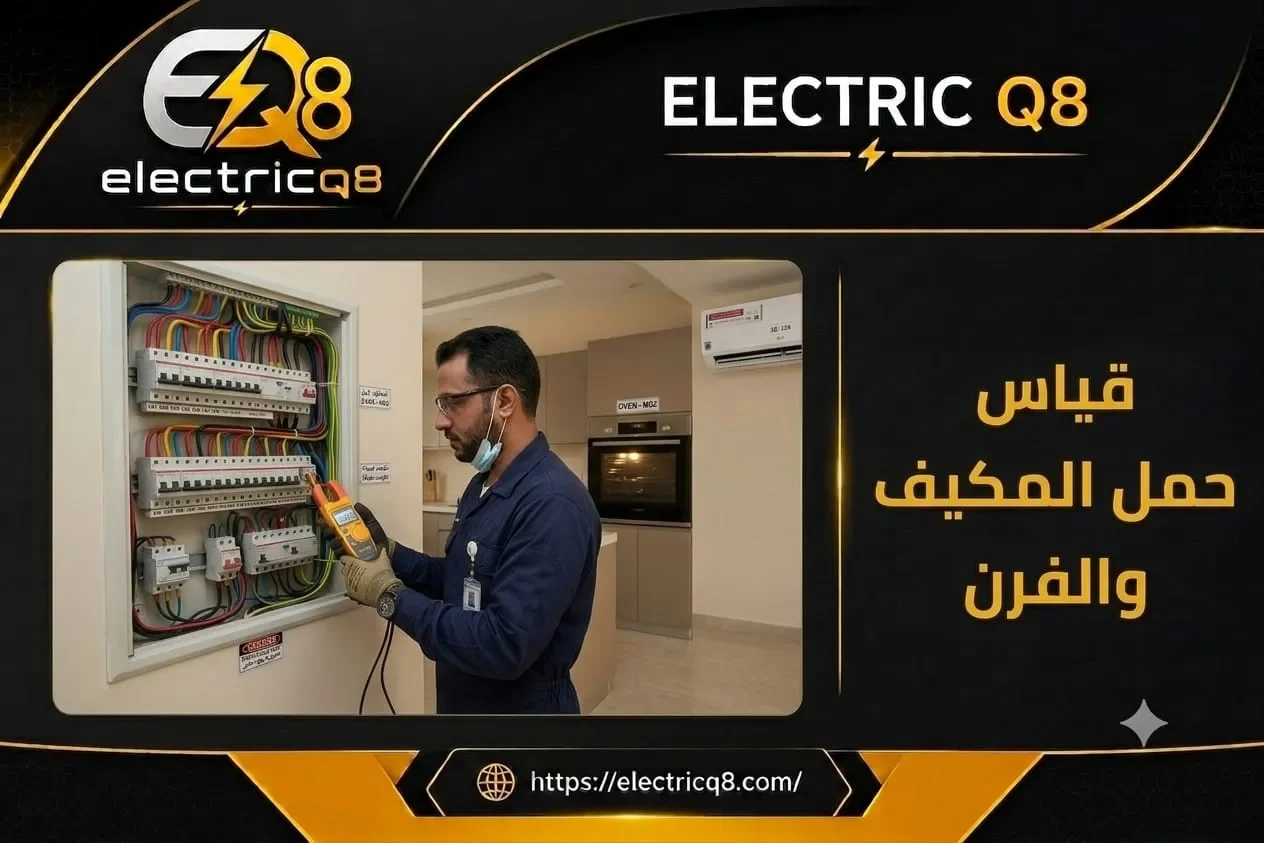
Running an air conditioner in Kuwait is not like using a small appliance for a few minutes and then switching it off. During summer, an air conditioner may operate for long hours alongside other devices in the room, such as a television, computer, and lighting. If its electricity comes from a shared circuit that was not designed to handle the combined load, problems may appear, including circuit breaker trips, overheating connections, or power interruptions affecting several appliances. This is where a dedicated AC power line becomes important, providing an electrical supply suited to the air conditioner's specifications and protection requirements. However, a dedicated line is not simply an additional wire running from the distribution panel to the air conditioner. Cable size, route length, installation method, suitable circuit breaker, and available electrical supply capacity must all be assessed before installation to ensure safe operation under actual working conditions.
Dedicated Power Line for an Air Conditioner

A dedicated power line for an air conditioner means providing a separate electrical circuit to supply the AC unit instead of sharing a branch circuit with bedroom outlets or other household appliances. The purpose is not to increase the air conditioner's cooling capacity or directly improve its cooling performance. Instead, it provides a suitable electrical supply for the required load and reduces the effect of air conditioner operation on devices connected to shared circuits.
Consider an illustrative example of an apartment where a split air conditioner was added after the original electrical installation had already been completed. Instead of preparing a dedicated circuit, the air conditioner was connected to an existing electrical point in the room. During milder weather, no obvious problem appears. However, as outdoor temperatures rise and the air conditioner operates for longer periods, the circuit breaker begins tripping, particularly when other appliances connected to the same circuit are running.
In this situation, connecting the air conditioner to a shared circuit deserves investigation, but it would be incorrect to conclude that the shared circuit is definitely responsible without inspection. The circuit may be unsuitable for the electrical load, or there may be a problem with the air conditioner, breaker, or wiring connections. The electrician therefore needs to review the air conditioner's specifications, identify the other appliances connected to the circuit, and inspect the existing protection before recommending a new power line.
It is important to understand that a dedicated circuit does not automatically mean every air conditioner requires the same cable size or circuit breaker rating. Split air conditioners differ in capacity, electrical supply requirements, operating current, and manufacturer recommendations. Some units also require a particular power supply arrangement between the indoor and outdoor units, depending on their design.
One advantage of a dedicated circuit is that it clearly identifies the air conditioner's electrical supply and makes the circuit easier to manage during appropriate maintenance work. If the dedicated circuit breaker trips, that breaker operating alone will not disconnect appliances supplied by other properly functioning circuits.
However, if the problem originates from the home's main electrical supply or an internal air conditioner fault, a dedicated line alone is not a guaranteed solution. The electrician must verify the distribution panel and supply capacity before adding another circuit.
-
Providing a dedicated electrical circuit for the air conditioner reduces the sharing of its load with bedroom outlets and other appliances because operating an AC unit for long hours on an unsuitable circuit may cause protective devices to trip or expose weak electrical connections particularly during periods of extreme summer heat
-
Installing a dedicated power line does not prove that the air conditioner or existing wiring is free from faults because repeated power interruptions may be associated with an internal unit problem or an issue with the main electrical supply and the electrician must identify the cause before treating the new circuit as a permanent solution
-
A dedicated circuit is also useful during maintenance because switching off its identified breaker makes it easier to determine which electrical supply is affected but maintenance still requires appropriate isolation and verification procedures and the breaker label alone must never be relied upon as proof that the circuit is de-energized
AC Power Line Installation in Kuwait
AC power line installation in Kuwait requires planning that considers the building's layout, the distribution panel location, and the distance to the air conditioning unit. In some apartments, the electrical panel is located close to the room requiring the new supply. In villas, however, the cable route may be considerably longer or pass through several areas before reaching the air conditioner. These differences affect cable routing, protection methods, and installation costs.
Before work begins, the electrician must confirm that the distribution panel has suitable capacity and space for adding a new circuit in a way that complies with the panel and electrical system specifications. The presence of an apparently empty breaker position does not automatically mean that another circuit can be installed or that the existing electrical supply can accommodate the additional load.
The next step is identifying an appropriate cable route. In some cases, an existing suitable pathway may be available inside the building. Other installations may require a new route designed according to electrical installation requirements. The decision depends on the condition of existing wiring, available pathway capacity, required protection, and the characteristics of the surfaces and areas through which the cable will pass.
In Kuwait, high ambient temperatures must also be considered, particularly when part of the cable route passes through areas exposed to direct sunlight or near the roof. A cable's current-carrying capacity is affected by installation conditions, temperature, and grouping with other cables. For this reason, cable size should not be selected solely from the air conditioner's capacity without reviewing these factors.
Cable route length is also important when evaluating voltage drop. If a cable is excessively long or its conductor size is unsuitable, voltage drop may exceed permissible limits under certain operating conditions. The conductor size must therefore be selected according to appropriate calculations and applicable requirements rather than guesswork.
Installation prices vary according to cable route length, installation method, cable type and specifications, distribution panel condition, and any additional work required. Installing a dedicated circuit in an apartment with suitable existing infrastructure differs from routing a new power line through several areas of a villa.
It is preferable to agree on the scope of work before installation and establish whether the quotation includes the breaker, cable, protective accessories, final inspection, and any necessary finishing or restoration work. This makes it possible to compare electricians' quotations based on equivalent work rather than simply choosing the lowest price.
-
Choosing an AC cable route depends on the location of the distribution panel the building layout and the capacity of existing pathways because passing the cable through different areas may change protection requirements and installation methods while affecting both the time required and the total cost
-
Kuwait's high temperatures cable route length and grouping with other cables are factors that must be considered when determining suitable conductor size because current-carrying capacity and voltage drop depend on actual installation conditions and the air conditioner's rated capacity alone is not enough to select the cable
-
Comparing prices for dedicated air conditioner power lines requires a quotation specifying the cable route length material specifications breaker testing and additional work because a lower price may not include everything necessary to install a dedicated electrical circuit correctly
Dedicated Circuit Breaker for an Air Conditioner
A dedicated circuit breaker for an air conditioner is a protective device assigned to the circuit supplying the AC unit according to the electrical installation design and equipment requirements. In the case of a suitable miniature circuit breaker, its primary function is to protect the circuit against overcurrent and short circuits within its specified operating characteristics. It does not increase the available electrical supply capacity and must not be replaced with a higher-rated breaker simply because the air conditioner causes repeated trips.
One mistake that sometimes occurs is when a homeowner notices the breaker tripping during AC operation and requests a replacement with a higher amperage rating. This can be dangerous if the wiring is unsuitable for the new rating because the breaker must be coordinated with the cable's current-carrying capacity, installation method, and equipment requirements.
Breaker selection also depends on the air conditioner's technical specifications, manufacturer instructions, and circuit characteristics. Some air conditioning systems contain compressors and motors with starting currents that differ from their normal operating currents. Inverter air conditioners, meanwhile, have operating and control characteristics that vary by model. It is therefore incorrect to assume that every split AC unit requires a breaker with the same current rating.
It is also important to distinguish between the circuit breaker installed in the distribution panel and any local isolation device required for the outdoor unit or specified in the installation instructions. The circuit breaker provides protection according to its specifications, while a suitable isolation device helps disconnect the electrical supply for maintenance. Requirements concerning their presence and location may differ according to the design and applicable standards.
If the dedicated breaker repeatedly trips, the timing of the interruption must be established. Does it happen immediately when the air conditioner starts, after the compressor has been operating for some time, or under particular operating conditions? This information helps the electrician determine whether the investigation should focus on the circuit, the AC unit, or the electrical supply conditions.
Having a separate circuit breaker also does not eliminate the need for protective earthing or any additional protection required by the electrical system. Air conditioner electrical safety depends on several coordinated elements rather than the breaker alone.
After installation, the electrician must verify that the breaker is suitable for the distribution panel, clearly label the circuit, and complete appropriate inspections before the air conditioner is operated.
-
Selecting the correct amperage rating for an AC circuit breaker requires considering the unit specifications cable capacity and circuit characteristics because increasing the breaker rating to prevent repeated trips may leave the wiring without the necessary protection and expose it to current levels exceeding its permissible capacity
-
The breaker installed inside the distribution panel performs a different function from a local isolation device used when servicing the air conditioning unit because overcurrent protection and equipment isolation for maintenance are separate functions that must be provided according to design requirements and manufacturer instructions
-
Repeated tripping of a dedicated AC breaker requires diagnosing the timing of the interruption and examining the unit and its connections because a trip occurring when the compressor starts differs from one happening after several hours of operation and the breaker should not be declared defective without suitable inspection
Independent Electrical Circuit for an Air Conditioner
An independent electrical circuit for an air conditioner means that the AC unit receives its supply through an identified circuit starting at the distribution panel and reaching the air conditioner without sharing that branch circuit with room outlets or other household appliances. However, circuit independence does not mean that the air conditioner is separate from the home's main electrical supply capacity. All circuits remain connected to the overall electrical system and its operating limits.
Imagine a bedroom containing an air conditioner, television, computer, and several electrical outlets. If all these appliances are connected to one shared circuit, the other devices may be affected when that circuit breaker trips. If the air conditioner has a correctly installed independent supply, however, its branch breaker operating will not, by itself, disconnect the separate circuit supplying the room's outlets.
This is where the distinction between separating circuits and increasing available electrical capacity becomes important. Adding another circuit helps organize power distribution and protection, but it does not increase the rating of the main breaker or the capacity of the main supply cables. If the house is already operating close to its electrical limits, a comprehensive assessment may be necessary before another air conditioner is added.
Circuit independence also requires reviewing how its conductors are connected. It is not acceptable to create a new power line while continuing to rely on unsuitable parts of an older circuit simply to save installation time. The circuit design must be clear and include the required conductors, appropriate protective devices, and protective earthing according to technical requirements.
Some homes have sub-distribution panels serving an entire floor. In such cases, the dedicated circuit may originate from a suitable sub-panel if its capacity and design allow it. Not every air conditioner must be supplied directly from the main distribution panel, but the selected supply point must be technically appropriate.
A practical benefit of an independent circuit is that it makes electrical load identification easier during inspection. When the air conditioner has its own circuit, the electrician can assess its supply more clearly than when several unrelated appliances share the same circuit.
The decision to install a new independent circuit ultimately depends on the air conditioner's requirements and the condition of existing wiring. If a dedicated circuit already exists and is suitable for the replacement unit, installing an entirely new line may not be necessary.
-
An independent air conditioner circuit reduces the effect of its branch breaker tripping on bedroom outlets and appliances supplied by other circuits because a dedicated supply makes the affected area easier to identify provided that the circuits are correctly separated inside the distribution panel
-
Adding a new electrical circuit does not increase the home's main power supply capacity because the main breaker supply cables and sub-distribution panels still have operating limits that must be assessed before installing additional air conditioning units or increasing existing electrical loads
-
Selecting the supply point for an independent circuit requires evaluating the main or sub-distribution panel conductors protection and earthing because having an electrical panel close to the air conditioner does not automatically mean it can safely accommodate another circuit without assessing its capacity and circuit arrangement
Choosing the Right Electrical Cable for an AC Unit

Selecting the right electrical cable for an AC unit is one of the most important stages of installing a dedicated power line because the cable must safely carry the required operating current under its actual installation conditions. Some homeowners ask which wire size is suitable for an air conditioner based only on its cooling capacity in tons, but that information alone is not sufficient to determine the correct conductor size.
Two air conditioners with similar cooling capacities may have different electrical requirements depending on energy efficiency, operating technology, supply voltage, and model specifications. Cable selection therefore begins with the manufacturer's technical data, required current, and recommended protective arrangements, followed by an assessment of the installation conditions.
The distance between the distribution panel and the air conditioner is another factor affecting cable selection. As the route becomes longer, the electrician must properly assess voltage drop because an unsuitable conductor size may allow voltage to fall beyond acceptable limits under load, potentially affecting equipment performance.
The installation method also has a direct effect. A cable installed inside a suitable pathway under certain thermal conditions is different from one passing through a high-temperature area or grouped with many other cables. Current-carrying capacity changes according to these conditions, making it necessary to apply the appropriate correction factors.
In Kuwait, some air conditioner power lines may pass near rooftops or outdoor areas exposed to direct sunlight. In these situations, the cable and its protective installation method must be suitable for the actual environment according to applicable specifications. Not every cable is suitable for direct sunlight or moisture exposure, even when its conductor size is adequate for the electrical current.
The conductors and connection accessories must also be compatible with the electrical system. A correctly sized cable is not enough if its terminations are unsuitable, its connections are poorly made, or it suffers mechanical damage during installation.
Choosing a larger conductor than necessary without technical assessment is not always the best solution either. Proper cable selection balances current-carrying capacity, voltage drop, protection, installation method, and equipment requirements.
For these reasons, it is preferable not to purchase the cable before inspecting the route and reviewing the air conditioner's technical data. Changing the cable type after installation begins can create additional costs and unnecessary delays.
-
The conductor size for an air conditioner cannot be determined from cooling capacity in tons alone because operating current voltage and manufacturer requirements differ between models and the unit's technical data must be reviewed before selecting suitable conductors for its electrical circuit
-
Cable route length installation method and surrounding temperature affect voltage drop and current-carrying capacity because a cable suitable for a short indoor route may require reassessment when installed over a longer distance or in an environment exposed to higher temperatures
-
AC cable safety also depends on insulation type environmental protection and the quality of electrical terminations because choosing an adequate conductor size cannot compensate for using a cable unsuitable for its location or for damaged and defective connections
Planning and Preparing Air Conditioner Electrical Wiring
Planning and preparing air conditioner electrical wiring is best carried out during apartment or villa construction, before the final finishing work is completed. Identifying air conditioner locations and electrical supply routes early allows wiring to be installed in an organized manner and reduces the need for wall cutting or exposed electrical conduits after the property is occupied.
During the preparation stage, the electrician should coordinate with the air conditioning technician to establish the positions of the indoor and outdoor units and the electrical requirements of the intended model. Some air conditioners require the main electrical supply to connect to the outdoor unit, while other designs use different arrangements according to manufacturer instructions.
One mistake that occurs during building preparation is marking an air conditioner location on the plans and then changing the unit's position after electrical wiring has been completed. This change may leave the electrical supply point too far from the required location or create the need for an additional cable route that was not included in the original design.
The number of air conditioners expected to be installed in the home must also be reviewed. Preparing one bedroom is different from providing electrical supplies for several rooms or an entire floor because future loads must be evaluated against the capacity of the distribution panels and the main electrical supply.
It is also important to distinguish between the air conditioner's power supply wiring and any control or communication connections between its units according to manufacturer requirements. Not every wire associated with an air conditioner performs the same function, and these connections must not be treated as interchangeable.
Preparing suitable isolation devices and determining their locations requires consideration of accessibility and maintenance requirements. For outdoor units, the environmental conditions at the installation location and the protection of electrical connections must also be taken into account.
If the property is under construction, it is preferable to document the cable routes before walls and ceilings are closed. This helps identify wiring locations in the future and reduces the likelihood of damaging cables when other fixtures or equipment are installed.
The cost of preparing air conditioner electrical supplies depends on the number of units, required cable routes, and project conditions. The work involved in a new building is generally different from adding a circuit after all finishing work has been completed, although the final price depends on the actual installation details.
-
Early coordination between the electrician and air conditioning technician helps identify the appropriate supply point for the indoor or outdoor unit according to the AC design because changing the unit's location after finishing work may require additional wiring or modification of the original cable route
-
Preparing electrical lines for several air conditioners requires reviewing future electrical loads and distribution panel capacity because providing a separate circuit for every room does not automatically mean the main electrical supply can operate all units simultaneously
-
Documenting air conditioner cable routes before walls and ceilings are closed is useful for future maintenance and modifications because knowing where the cables run reduces the likelihood of damaging them during drilling or the installation of furniture and new fixtures
Running a Separate Electrical Wire for an Air Conditioner
Running a separate electrical wire for an air conditioner is a phrase many homeowners use when they want to separate the AC supply from the bedroom's electrical outlets. Technically, however, the requirement is not simply to add one wire. It is to install a complete circuit with suitable conductors, protective devices, and earthing according to the electrical system design.
Sometimes an air conditioner is connected through an older electrical point, and the homeowner wants to convert it to an independent supply. In this situation, the electrician needs to identify the original circuit route and determine whether it was already dedicated to the air conditioner or shared with other appliances. The electrician must also confirm that the new route can be installed without relying on unsuitable parts of the existing wiring.
Choosing the installation method is another important consideration. Some properties allow a concealed cable route to be installed under suitable building conditions, while other locations may require an exposed route within an appropriate protective enclosure or conduit. The choice depends on safety, installation requirements, and maintenance accessibility rather than appearance alone.
If the cable route passes near doors or through areas exposed to impact or moisture, suitable mechanical and environmental protection must be provided. Cables must not be routed through inappropriate spaces or exposed to pressure, sharp edges, or conditions that may damage their insulation.
A common mistake is using temporary extensions or unsuitable additional connections as a substitute for a dedicated electrical line. An air conditioner may operate for long hours, so its electrical supply must be permanent and compatible with the unit's requirements.
Some homeowners also request the reuse of existing wires to reduce costs. Reusing an older cable may be appropriate only when inspection confirms that its specifications are suitable and its condition is satisfactory. If the conductor size, insulation, or route is unsuitable, the problem must be corrected properly.
After installation, the circuit must be clearly identified, and its connections and protective arrangements tested according to the relevant requirements. The objective is to provide a complete electrical supply rather than merely changing the power source without ensuring proper circuit design.
-
Running a separate electrical wire for an air conditioner technically means installing a complete electrical circuit rather than adding a single conductor because a safe supply requires the necessary conductors appropriate protection and protective earthing according to the AC specifications and electrical system design
-
Choosing concealed or exposed wiring depends on building conditions cable route characteristics and required protection because appearance alone does not determine cable safety particularly when the route is exposed to moisture physical impact or high temperatures
-
Reusing older electrical wiring to supply an air conditioner requires checking conductor size insulation condition and installation method because the presence of an existing cable inside the wall does not prove that it can safely support the new AC unit's electrical load or protective requirements
Dedicated Electrical Line for a Split Air Conditioner
A dedicated electrical line for a split air conditioner requires reviewing the particular unit's specifications because split AC systems differ in capacity, electrical supply arrangements, and connections between their indoor and outdoor units. Some models receive their main electrical supply at the outdoor unit, while other models have different arrangements. The manufacturer's installation instructions are therefore the primary reference.
It is important to distinguish between the power cable supplying electricity and any communication or control cables connecting the two units. These connections perform different functions, meaning each has specific requirements. Wires must not be interchanged or their connection order changed without referring to the equipment's wiring diagram.
Modern split air conditioners may also use inverter technology, which controls compressor operation differently from certain conventional systems. This affects operating characteristics, but it does not justify assuming that every inverter air conditioner requires a smaller breaker or a particular conductor size.
If the new air conditioner replaces an older model, the existing electrical line should be reviewed before connection. Similar cooling capacities do not necessarily mean that the two units have identical current requirements, protective arrangements, or power supply configurations.
The outdoor unit is also generally exposed to environmental conditions different from those surrounding the indoor unit. Its electrical connections and any suitable isolation devices must therefore be protected according to the installation location, manufacturer instructions, and applicable requirements.
The position of the outdoor unit relative to the distribution panel is another important consideration when preparing a split AC power line. If the unit is located far away or the cable must pass across the roof, installation requirements may differ from those of a unit positioned close to the room.
The electrician must also confirm that the electrical supply matches the air conditioner's specified voltage, frequency, and phase requirements. The appearance of the plug or the general type of appliance is not enough to determine how it should be connected.
Coordination between a qualified electrician and a specialist air conditioning technician is preferable so that responsibility for the electrical supply is clear and the unit's installation requirements are followed according to the manufacturer.
-
A split air conditioner's electrical supply must match the power connection arrangement specified by its manufacturer because some models receive their main supply at the outdoor unit while others use different configurations and one connection method must not be assumed suitable for every model
-
Replacing an older split air conditioner with a new model requires reviewing operating current protection and electrical connections even when their cooling capacities are similar because differences in design and operating technology may result in different electrical requirements
-
The outdoor unit's location affects cable routing and connection protection because wiring passing across a rooftop or through an area exposed to sunlight and moisture requires assessment of the actual environmental conditions rather than relying on indoor installation materials that are unsuitable for such exposure
Installing a Separate Circuit Breaker for an AC Unit

Installing a separate circuit breaker for an AC unit first requires confirming that there is a suitable dedicated circuit to which the breaker can be connected. Simply installing another breaker inside the distribution panel without actually separating the air conditioner's supply from the shared circuit does not achieve the intended objective and may create problems if the wiring is modified incorrectly.
In some homes, a dedicated air conditioner line already exists, but its breaker is old or unsuitable for the requirements of a replacement unit. In this situation, the electrician must assess the circuit, cable, and protective arrangements before selecting a replacement breaker.
If the air conditioner shares its supply with bedroom outlets, however, the work may require installing a new circuit rather than simply adding a breaker inside the panel. The difference between these situations affects the cost, installation time, and scope of work.
The breaker must also be compatible with the distribution panel and required protective specifications. Not every breaker with the same amperage rating is suitable for every panel or circuit because devices have different technical characteristics related to their design, installation, and breaking capacity.
Some air conditioning systems may also require additional protective or isolation arrangements according to manufacturer instructions and applicable standards. The unit's requirements must therefore be reviewed rather than assuming that the branch circuit breaker alone provides every necessary protective and isolation function.
A common mistake is replacing the breaker because it trips repeatedly without inspecting the air conditioner. If the compressor or wiring has an internal fault, the breaker may continue tripping even after a suitable new protective device has been installed.
After installation, the AC breaker must be clearly labeled, the circuit it controls verified, and appropriate inspections completed. Labeling helps manage the electrical supply but does not replace verification of isolation before maintenance work.
The price of installing a breaker also depends on whether the work involves replacing an existing device or adding an entirely new circuit. It is therefore preferable to establish the work scope before comparing quotations.
-
Installing a separate breaker inside the distribution panel does not automatically create an independent circuit because the air conditioner may remain connected to shared wiring and the actual supply route must be verified before the work can be considered complete
-
Breaker compatibility with the distribution panel cable and air conditioner requirements is essential because two devices having the same amperage rating does not prove that their technical characteristics are identical or that both are suitable for the same protective arrangement
-
The cost of installing an AC circuit breaker differs from the cost of installing a complete dedicated power line because replacing a breaker on an existing suitable circuit involves different work from creating a new cable route and providing the necessary protection connections and testing
Electrician for AC Power Line Installation in Kuwait
Choosing an electrician for AC power line installation in Kuwait requires finding a qualified professional who can assess the circuit, air conditioner, and distribution panel before recommending a cable type and circuit breaker. The service involves more than pulling a wire from one location to another. It requires providing an electrical supply that matches the unit's requirements and the building's conditions.
When contacting an electrician, it is useful to explain the air conditioner type and model, the locations of the indoor and outdoor units, and the distribution panel location if known. It also helps to mention whether the air conditioner is new or replacing an older unit and whether the existing supply has experienced repeated breaker trips or overheating.
An important sign of a suitable electrician is that they request the air conditioner's technical information and explain the reasons for selecting the cable, breaker, and installation method. A qualified professional does not recommend one fixed cable size for every air conditioner without reviewing its specifications and the proposed route.
The distribution panel should also be assessed when a new circuit is required. Having an empty breaker position is not enough because electrical supply capacity, circuit arrangement, and panel condition all affect whether an additional circuit can be installed.
The quotation should clearly identify whether it includes the cable, circuit breaker, protective accessories, installation work, testing, and any required finishing or restoration. It should also explain whether additional repairs would require approval before being carried out.
The electrician must follow appropriate safety procedures when working inside the electrical panel and verify that the circuit is safe before the air conditioner is operated. If special connections are required between the split AC units, coordination with the air conditioning technician may be necessary according to manufacturer instructions.
After completing the installation, the electrician should explain where the dedicated AC breaker is located and provide any observations relevant to operation or maintenance. If the original problem involved repeated tripping, it is important to verify its cause rather than assuming that adding the new line automatically proves the fault has been resolved.
The most suitable service provides a properly designed circuit with clear specifications and explains what was installed and tested rather than relying only on the fact that the air conditioner operated when the work was handed over.
-
Choosing an electrician to install a dedicated AC power line depends on their ability to review the unit's technical data distribution panel condition and cable route because selecting conductor size and breaker rating without this information may result in a supply unsuitable for actual operating conditions
-
A clear quotation specifies materials cable route length installation method protection testing and finishing work because differences in these details explain why prices vary between a straightforward apartment installation and a cable route passing across a rooftop or through several building areas
-
Receiving an explanation of the new circuit its breaker location and the inspections performed helps the homeowner understand the electrical supply arrangement because the air conditioner operating after installation does not by itself prove that every connection and protection requirement has been verified
Conclusion
A dedicated AC power line helps separate the air conditioner's electrical load from circuits shared with household outlets and appliances, providing a clearer arrangement for power distribution and protection. However, successful installation depends on selecting a suitable cable, assessing the route conditions, reviewing the distribution panel and main electrical supply capacity, and using a breaker compatible with the unit's specifications. In Kuwait, high temperatures and installation conditions require particular attention, especially when cables pass near rooftops or outdoor areas. If an air conditioner repeatedly trips the electricity or has been added to an older circuit, the existing installation should be inspected before deciding on a new power line. Hiring a qualified electrician helps establish whether a new circuit is necessary or whether the existing supply requires repair. The objective is not simply to make the air conditioner run but to provide a suitable and safe electrical supply capable of supporting its actual operating conditions.
Frequently Asked Questions
Does every air conditioner need a dedicated electrical circuit?
This depends on the air conditioner's specifications, manufacturer requirements, electrical installation design, and applicable standards. Many air conditioning units require suitable dedicated circuits, but the final decision must be based on a professional assessment rather than cooling capacity alone.
What electrical wire size is suitable for an air conditioner?
There is no single wire size suitable for every air conditioner. Conductor size is determined according to the required current, voltage, cable route length, installation method, ambient temperature, protective arrangements, and manufacturer instructions.
Will a dedicated AC power line completely prevent breaker trips?
No. A dedicated line reduces the sharing of the air conditioner's electrical load with other appliances, but it cannot prevent tripping caused by an internal AC fault, a circuit problem, or an issue with the main electrical supply. Repeated tripping requires appropriate diagnosis.
Can I install a separate breaker without running a new cable?
This may be possible in certain cases if a dedicated circuit already exists and inspection confirms that it is suitable. However, if the air conditioner is connected to a shared circuit, installing a new electrical line may be necessary to achieve genuine circuit independence.
How much does a dedicated AC power line cost in Kuwait?
The price varies according to cable length and specifications, distribution panel location, installation method, breaker requirements, and any additional work. It is preferable to request an inspection and a clear quotation covering materials, installation, and testing before agreeing to the cost.