
If appliances shut down or restart when other equipment is used in the house, it is not enough to simply say the “power is weak” and start replacing wires or breakers based on assumptions. The first step is to turn that general description into clear symptoms and determine whether the change affects one appliance, one circuit, or several areas of the home. Voltage drop is an important possibility, but it is not the only explanation for appliances shutting down or lights becoming dimmer. A qualified electrician compares supply conditions under appropriate operating circumstances and determines whether the problem is within a household circuit, at a particular electrical point or connection, or within a wider part of the supply that requires a different assessment. Proper diagnosis identifies the source of the voltage drop before repair instead of focusing on the appliance while the actual cause remains in the electrical supply.
Weak Power Shuts Devices Off

When weak power shuts devices off, as the homeowner may describe it, the first question should not be “What should we replace?” but rather “What exactly is happening?” Weak power can mean lights dimming briefly, a television restarting, an appliance stopping when another load starts, or several devices being affected at the same time. Turning the complaint into a specific pattern is the first step toward avoiding the mistake of treating all of these symptoms as the same electrical problem.
Consider a practical example. If an appliance in one room restarts every time another appliance operates while the rest of the house shows no obvious change, the inspection begins by examining the relationship between those appliances and the circuit or supply serving them. If lighting in several rooms changes at the same moment and appliances on different circuits are affected together, that presents a different pattern and may expand the scope of the assessment. This distinction matters because repairing one circuit will not solve a wider supply problem if inspection confirms that the cause extends beyond that circuit.
Even when the symptoms resemble voltage drop, it should not be considered confirmed without appropriate measurements. The appliance itself could have a problem, or the condition could involve a connection, circuit, or another part of the supply. The electrician needs to compare voltage at suitable points under operating conditions that represent when the problem occurs while considering the applicable system requirements rather than relying on a single reading taken when little or no load is operating.
The homeowner should not open the electrical panel or outlets and attempt voltage measurements personally to prove the problem. It is enough to record which appliances are affected, when the change occurs, and what other equipment is operating at the time. This provides the electrician with useful practical information without exposing anyone to energized electrical components.
-
Describing which appliance shuts down when the problem occurs and what other equipment is operating provides stronger diagnostic information than simply saying the electricity is weak because the same general description can represent several different electrical faults
-
One appliance being affected is different from appliances on several circuits being affected because the extent of the symptoms helps the electrician determine whether inspection should begin with a specific circuit or cover a wider section of the electrical supply
-
Confirming voltage drop requires qualified measurements related to the conditions under which the problem appears rather than relying only on dimming lights or an appliance shutting down because these symptoms can have more than one explanation
Appliances Shut Down Due to Weak Power
When appliances shut down due to weak power, it is important to distinguish between two events happening at the same time and actually proving that one caused the other. An appliance may shut off at exactly the moment another appliance starts operating. This is a very useful observation, but it does not by itself prove that the second appliance is “pulling all the electricity” in the way people sometimes imagine. The important question is what actually changed in the electrical supply when the event occurred.
In a practical situation, a television may restart when another appliance starts while nearby lighting shows a slight change. Instead of replacing the television or installing a larger breaker, the timing of the event should be recorded and the circuit, supply, and voltage assessed under similar conditions when doing so is safe and appropriate. If a voltage change is confirmed, the next step is identifying where that change appears and what part of the system is associated with it.
It is also important to remember that different appliances respond differently to changes in supply conditions. One appliance may continue operating while another electronic device restarts or shuts down. Therefore, one appliance remaining operational does not rule out an electrical supply problem, just as one sensitive appliance shutting down does not by itself prove that the entire home has a voltage problem.
Another mistake is purchasing voltage stabilizers or protective devices before identifying the source of the problem on the assumption that they will solve everything. Certain equipment may be appropriate for specific applications depending on the appliance specifications and the actual condition, but installing it does not replace diagnosing the source of supply variation when a circuit, connection, or another part of the electrical system is faulty.
-
An appliance shutting down at the same time another appliance starts creates a useful timing relationship for the electrician to investigate but it does not prove the cause without determining what happened to the voltage and circuit when the symptom appeared
-
Different appliances may respond differently to the same supply condition which means one appliance continuing to operate while another stops is not enough to determine whether the problem is inside the appliance circuit or wider electrical supply
-
Buying a voltage stabilizer or protective device before identifying the source can hide a symptom without correcting its cause which is why the nature of the problem should be established before deciding whether additional protection is actually required
Low Voltage in the Home
Low voltage in the home cannot be properly diagnosed simply because the lighting seems weaker than usual or from one isolated voltage reading. Diagnosis requires appropriate comparative measurements under relevant operating conditions and an understanding of whether the reduction appears at one electrical point, across an entire circuit, or on several circuits. This distinction helps determine where the search for the source should begin.
For example, if a noticeable voltage change appears on a particular circuit when a load connected to that circuit operates while other circuits do not show the same behavior, that information directs inspection toward a more specific area. If the change appears simultaneously across several parts of the home, the electrician needs to consider a wider scope. Neither situation justifies immediately deciding that all the wiring in the house should be replaced.
It is also inappropriate to apply one fixed voltage-drop percentage as a universal judgment for every installation without considering the applicable system, design, project requirements, and equipment involved. Conductor characteristics, route length, electrical load, installation method, connections, and operating conditions can all matter during assessment. A lower voltage reading at one point also does not automatically mean that the conductor is undersized because the actual source of the change must be identified through evidence.
The electrician compares readings methodically and looks for where the difference begins instead of randomly replacing electrical components. If the problem appears only under a particular load, that information can be incorporated into the diagnosis without forcing the circuit into hazardous conditions or repeatedly operating equipment when doing so produces overheating, tripping, or other unsafe symptoms.
-
Low voltage requires comparison between suitable points and relevant operating conditions because a single reading without information about the load and measurement location does not provide a complete picture of where the voltage drop begins or how far it extends
-
A voltage change that appears on one circuit differs from a change appearing across several circuits at the same time because the distribution of symptoms helps determine whether the source is local or requires assessment of a wider part of the supply
-
A voltage reduction does not automatically prove that the conductor is undersized or that the house requires rewiring because conductors connections load routing and the source of supply all need to be considered before selecting a repair
Appliances Stop During Voltage Drop
When appliances stop during voltage drop, it is important to identify exactly how they stop and when they return to operation. There is a difference between an appliance that switches off briefly and restarts automatically, one that stops and does not operate again until the user intervenes, and several appliances that are affected at exactly the same time. The response pattern provides useful diagnostic information but does not by itself determine whether the problem is inside the appliance, within the circuit, or in a wider section of the electrical supply.
It is also incorrect to assume that every appliance shutting down when another load starts proves that the entire home's electrical capacity is insufficient. If the problem appears on only one circuit, that situation is different from appliances on several circuits being affected. The electrician needs to establish the boundaries of the symptom before considering panel expansion, wiring replacement, or the installation of additional circuits.
The specifications of affected appliances can also be relevant because electronic equipment does not all respond in the same way to changes in supply conditions. However, reviewing appliance specifications does not replace checking the electrical source when the same problem affects multiple devices. The objective is to distinguish between an appliance with an individual fault and a normally functioning appliance responding to a condition in the electrical supply.
If appliances repeatedly stop, deliberately operating loads many times simply to reproduce or record the problem is not recommended. Record the timing, the appliances that were operating, and which part of the home was affected. If severe heat, a burning smell, sparking, or repeated breaker trips occur, these warning signs require electrical inspection rather than continued experimentation.
-
The way an appliance stops when it returns to operation and how many devices are affected at the same moment provide different pieces of information that help distinguish between a single appliance problem a specific circuit issue and a wider supply condition
-
Appliances stopping when another load starts does not prove that the entire home's electrical capacity is inadequate because the affected circuits need to be identified before considering panel expansion load redistribution or wiring changes
-
Deliberately operating appliances repeatedly to reproduce the fault is unnecessary when abnormal warning signs appear because recording the circumstances of the symptom provides a useful starting point while qualified personnel handle the electrical testing
Weak Current in the House
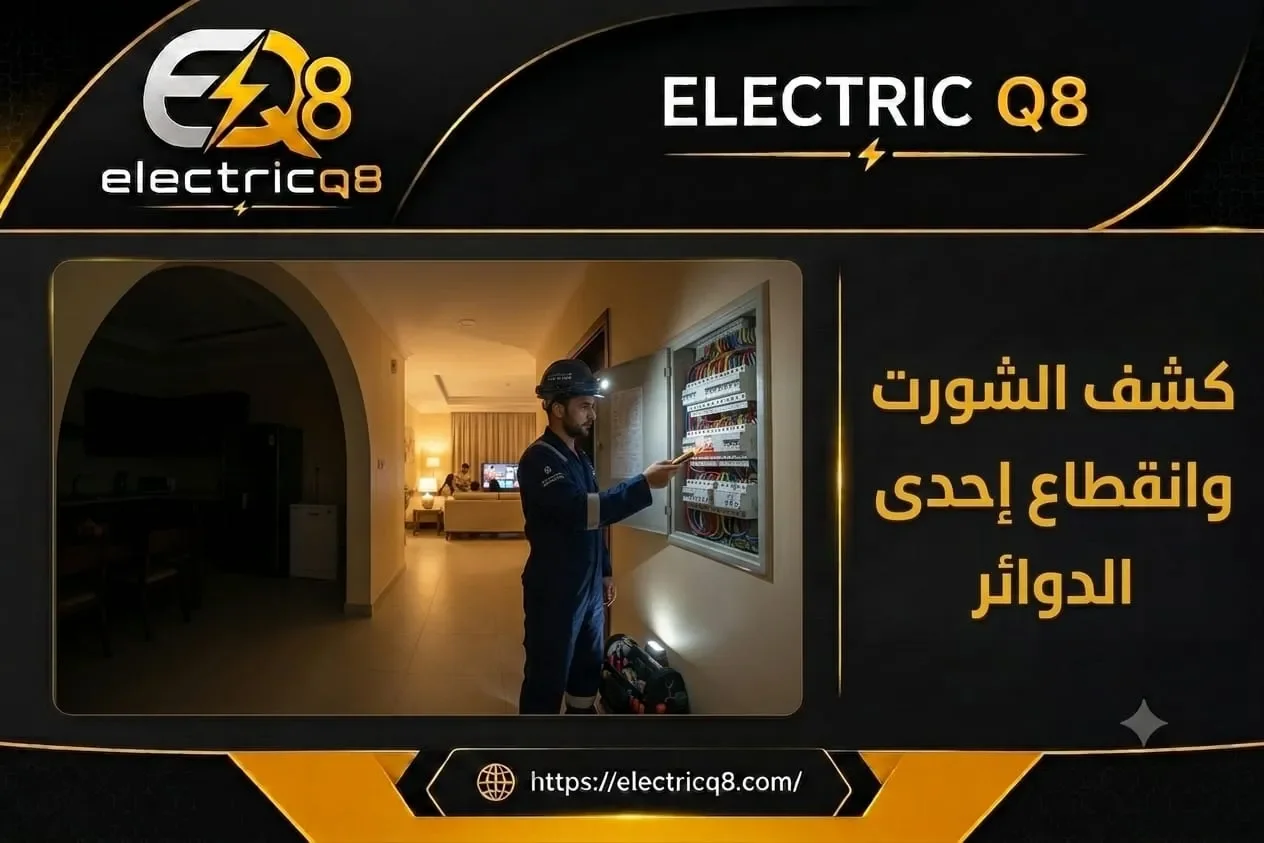
The phrase weak current in the house is commonly used to describe electrical problems, but technically it needs to be defined more precisely. Homeowners often mean that appliances seem weaker, lighting becomes dim, or certain equipment shuts down. Current and voltage are not the same thing, so an electrician should not base the diagnosis on the phrase itself but should convert it into specific symptoms that can be assessed and measured.
If the homeowner says that “the electricity gets weaker at night,” the useful question is what actually changes during that period. Do lights dim throughout the entire home? Is the problem limited to one room? Does a specific appliance restart? Does the symptom coincide with particular equipment operating inside the property? Defining this pattern is more useful than immediately assuming that the external electrical supply is responsible.
In some cases, the issue may be associated with an internal circuit, while in others the symptoms may appear across a wider area. The location of the fault should not be decided by perception alone. The electrician needs appropriate comparisons to identify where the change begins. If measurements inside the property suggest that the condition extends beyond a single circuit, the diagnostic path may need to consider a wider source depending on the findings.
A general complaint of “weak current” should also not be treated by installing a higher-rated breaker. A larger breaker does not increase voltage and does not give conductors additional capacity. If the actual problem involves voltage drop, a connection, or another supply issue, changing the breaker without diagnosis does not correct the cause.
-
The phrase weak current should be translated into specific symptoms such as dimming lights an appliance restarting or several devices stopping because the general expression alone does not identify the type of electrical problem
-
The time at which the weakness appears becomes useful diagnostic information when it is connected to the appliances and circuits affected at that time rather than assuming the problem originates from the external supply or household wiring before inspection
-
Installing a higher-rated breaker does not correct low voltage or increase conductor capacity which means protective device selection should never be used as a solution for a problem described generally as weak electricity
Appliances Don’t Work With Low Voltage
If appliances don’t work with low voltage, it is necessary to distinguish between an appliance that stopped because the supply conditions moved outside its suitable operating range and an appliance with an independent fault that happened to appear at the same time. Timing is important, but it is not enough to establish the electrical supply as the final cause without comparison and inspection.
One mistake that sometimes happens is replacing an appliance or sending it for repair only to discover that the same problem appears with another appliance at the same location. The opposite can also happen when the home's electrical supply is blamed even though only one appliance has a problem. Identifying how many appliances and locations are affected eliminates a great deal of unnecessary guesswork.
If only one appliance refuses to operate while everything around it remains normal, the assessment may need to consider both the appliance and its associated supply point depending on the circumstances. If several appliances in different areas stop or restart simultaneously, that information expands the inspection scope. This still does not justify deciding in advance that old wiring or the electrical panel needs replacement.
It is also not advisable to move a high-load appliance between different outlets around the house in search of a “stronger” electrical point. A nearby outlet or another room does not mean the circuit is suitable for the equipment. Appliances with specific electrical requirements should be handled according to manufacturer requirements and appropriate circuit design rather than trial and error.
-
One appliance failing to operate requires separating a possible appliance fault from a supply point problem while several appliances being affected in different areas creates a wider diagnostic path that requires a different assessment
-
Moving appliances between outlets in search of stronger electricity is not an appropriate test because each electrical point may belong to a different circuit and an outlet that temporarily operates the appliance is not automatically the correct supply for it
-
The age of the wiring or electrical panel is not sufficient evidence of why appliances stop because repair or replacement decisions should depend on actual condition measurements and inspection findings that identify the source of the problem
Voltage Drop Affects Appliances
Understanding how voltage drop affects appliances requires explanation without exaggeration. The effect of a voltage change depends on the type and design of the appliance, manufacturer requirements, the severity and duration of the change, and operating conditions. It is therefore incorrect to claim that every small voltage drop will damage an appliance, just as repeated shutdowns or restarts should not be ignored when they are linked to an actual supply variation.
Electronic equipment can show different symptoms from other electrical loads. One appliance may restart while another continues operating, and the problem may appear only under certain operating conditions. Different responses do not contradict each other. Instead, they provide another reason not to diagnose the electrical condition of the entire house based on the behavior of one appliance.
It is also important to distinguish between protecting equipment and correcting the source of the problem. A suitable protective device may be part of the solution in certain applications according to equipment requirements, but it does not repair a damaged connection, correct an unsuitable circuit, or identify where the voltage drop begins. If the problem is within the electrical system itself, the source still needs to be addressed.
If appliances repeatedly shut down, it is better to document the pattern rather than waiting for equipment damage as proof that something is wrong. Record which appliances are affected, when the problem occurs, and whether the lighting changes at the same time. This gives the electrician a more useful starting point than searching for a general electrical problem without a defined pattern.
-
The effect of voltage drop varies according to appliance type design operating requirements and the nature of the voltage change which means the same outcome should not be assumed for every appliance in the home
-
Different responses from two appliances under the same conditions do not rule out an electrical problem because some equipment may restart while other devices continue operating depending on their design and supply requirements
-
Protective equipment may be appropriate in specific situations but it is not a substitute for correcting the source of voltage drop when inspection confirms a problem within the circuit connections or electrical supply
Measuring Voltage in the Home
Measuring voltage in the home is useful when it forms part of an organized diagnostic process rather than simply producing one number from a single reading. A measured value needs context that explains where the measurement was taken, when it was taken, what loads were operating, and what symptoms were present. Without this information, a reading may be accurate at that particular moment but fail to explain a problem that occurs under different conditions.
Depending on the symptom, the electrician may need to compare different operating conditions. If the problem appears when a particular load operates, the comparison can be related to that event when testing can be performed safely and appropriately. If the change occurs in several parts of the house, suitable measurement points can help determine whether the difference is confined to one circuit or extends across a wider area.
It is not useful to present one voltage figure as a universal threshold at which every home requires repair without considering the electrical system, equipment requirements, and applicable standards. Measurement interpretation needs to relate to the actual installation and operating conditions rather than relying on a general number without context.
Most importantly, taking voltage measurements on energized electrical components is not a household experiment for an unqualified person. The homeowner does not need to open the electrical panel or dismantle an outlet to provide the electrician with a reading. Describing the symptom and its timing is enough for a qualified electrician to select appropriate tools and measurement points safely.
-
A voltage reading becomes diagnostically useful when it is connected to the measurement location operating load and timing of the problem because a single number without context does not identify the source of the voltage drop
-
Comparing suitable measurement points helps determine whether the voltage change is limited to one circuit or appears across several parts of the home instead of relying on one isolated reading
-
Voltage measurements inside an electrical panel or on energized components require qualified personnel and appropriate equipment and the homeowner does not need to open any electrical component to assist with diagnosing the problem
Weak Electricity Inspection in Kuwait
A weak electricity inspection in Kuwait should begin by defining the actual symptom before discussing the repair. If the complaint is that appliances shut down, the inspection path differs from a case where lighting dims in one room or a change appears across several areas of the property. Each condition has a different diagnostic scope, so the same solution should not be applied to everyone who describes the electricity as weak.
Cost also depends on the scope of work rather than the word “weakness.” Inspecting one specific circuit differs from tracing a voltage change that appears across several circuits. Accessibility, the number of electrical points requiring assessment, the nature of the fault, and any materials required after a repair need is confirmed can all affect the final price.
When comparing electrician quotations, ask about the scope of the inspection. Is the service simply a visit and visual observation, or does it include measurements and diagnosis related to the reported symptom? If the problem requires additional repair, will the cause and proposed work be explained before that work begins? These questions are more useful than selecting the lowest figure alone.
The better service in this situation is not the one that immediately starts replacing wiring or the electrical panel. It is the service that identifies the source first. If the fault is confirmed to be localized, the repair can remain appropriately limited. If the inspection shows that the problem is wider, the scope can then be expanded based on evidence rather than assumption.
-
The cost of inspecting weak electricity varies according to the number of affected circuits required measurements accessibility and any repair that becomes necessary which means there is no single price that accurately represents every case before diagnosis
-
Comparing service quotations becomes more meaningful when you understand what the inspection includes and what is considered additional repair because a basic visit is not the same as tracing voltage changes across several circuits
-
Diagnosis that identifies the source of the weakness before proposing wiring replacement reduces unnecessary work and ensures that the repair decision is based on actual findings rather than replacing electrical components by assumption
Electrician for Weak Power Problems in Kuwait
Choosing an electrician for weak power problems in Kuwait means looking for someone who treats “weak electricity” as a complaint that needs to be defined rather than as a ready-made diagnosis. A suitable electrician asks which appliances stop, when the symptom occurs, whether it repeatedly affects the same location, whether lighting changes at the same time, and whether the problem began after electrical modifications or additional equipment was installed.
These questions matter because they establish the correct starting point. If the symptom is limited to one circuit, the inspection path differs from a problem appearing on several circuits. If only one appliance is affected without any other electrical symptom, that information also helps prevent the entire household supply from being blamed too quickly.
After inspection, the findings should be explained clearly. If voltage drop is confirmed, its scope and source should be identified as far as the inspection evidence allows. If the measurements do not support that possibility, other causes should be investigated rather than replacing wiring simply because the customer initially described the problem as weak electricity.
If the problem is accompanied by severe heat, a burning smell, smoke, persistent sparking, electric shock, or metal suspected of being energized, measuring voltage or reproducing the appliance problem is no longer the priority. Stay away from the hazardous area, request appropriate assistance, and do not open the electrical panel or approach unsafe electrical components.
-
A suitable electrician converts the description of weak electricity into specific symptoms and identifies the affected appliances circuits and timing before selecting tests because diagnosis begins with the pattern of the problem rather than a general name for the complaint
-
Confirming voltage drop requires findings connected to the scope of the problem while failing to confirm it means other causes should be investigated instead of replacing wiring or the electrical panel simply because appliances were reported to be shutting down
-
Smoke persistent sparking severe heat electric shock or suspected energized metal changes the priority to immediate safety and requires staying away from the source of danger instead of continuing to operate appliances to demonstrate the problem
Conclusion
If weak electricity is shutting appliances off, do not begin by replacing breakers or wiring, and do not assume that the appliance or the incoming supply is responsible before inspection. Record which appliance shuts down, when the symptom occurs, whether the lighting or other appliances are affected, and whether the problem is limited to one circuit or appears in several parts of the home. This information helps the electrician measure voltage under appropriate conditions, compare the extent of the change, and trace the source of the voltage drop if one is confirmed. Accurate diagnosis distinguishes between an appliance problem, a circuit fault, and a wider supply condition while preventing money from being spent on repairs unrelated to the actual cause. If severe heat, a burning smell, smoke, sparking, or electric shock appears, the priority is to stay away from the hazard and request appropriate assistance.
Frequently Asked Questions
Can weak electricity really cause appliances to shut down?
Changes in electrical supply conditions can cause some appliances to stop or restart depending on their design and operating requirements. However, one appliance shutting down does not prove that low voltage is the cause, so appropriate diagnosis and voltage measurements are needed.
How do I know if low voltage affects one circuit or the whole house?
It is useful to observe which areas and appliances are affected at the same time, but properly determining the scope requires suitable measurements. A problem affecting one electrical point or circuit differs from symptoms appearing across appliances located in several parts of the home.
Do dimming lights mean I have a voltage drop?
Dimming lights are a symptom worth investigating, but they are not sufficient by themselves to confirm voltage drop. The symptom should be related to measurements, operating conditions, and where the change occurs before the cause is determined.
Will replacing the wiring solve weak electricity?
Not before diagnosis. If inspection confirms that part of the wiring is unsuitable or damaged, the repair may involve that section. Replacing wiring simply because the electricity is generally described as weak may fail to correct the actual source of the problem.
How much does a weak electricity inspection cost in Kuwait?
The cost depends on the scope of the problem, the number of circuits requiring inspection, the measurements needed, accessibility, and any repair confirmed as necessary. Pricing can therefore be determined more accurately after establishing whether the problem is localized or extends across a wider part of the electrical system.



