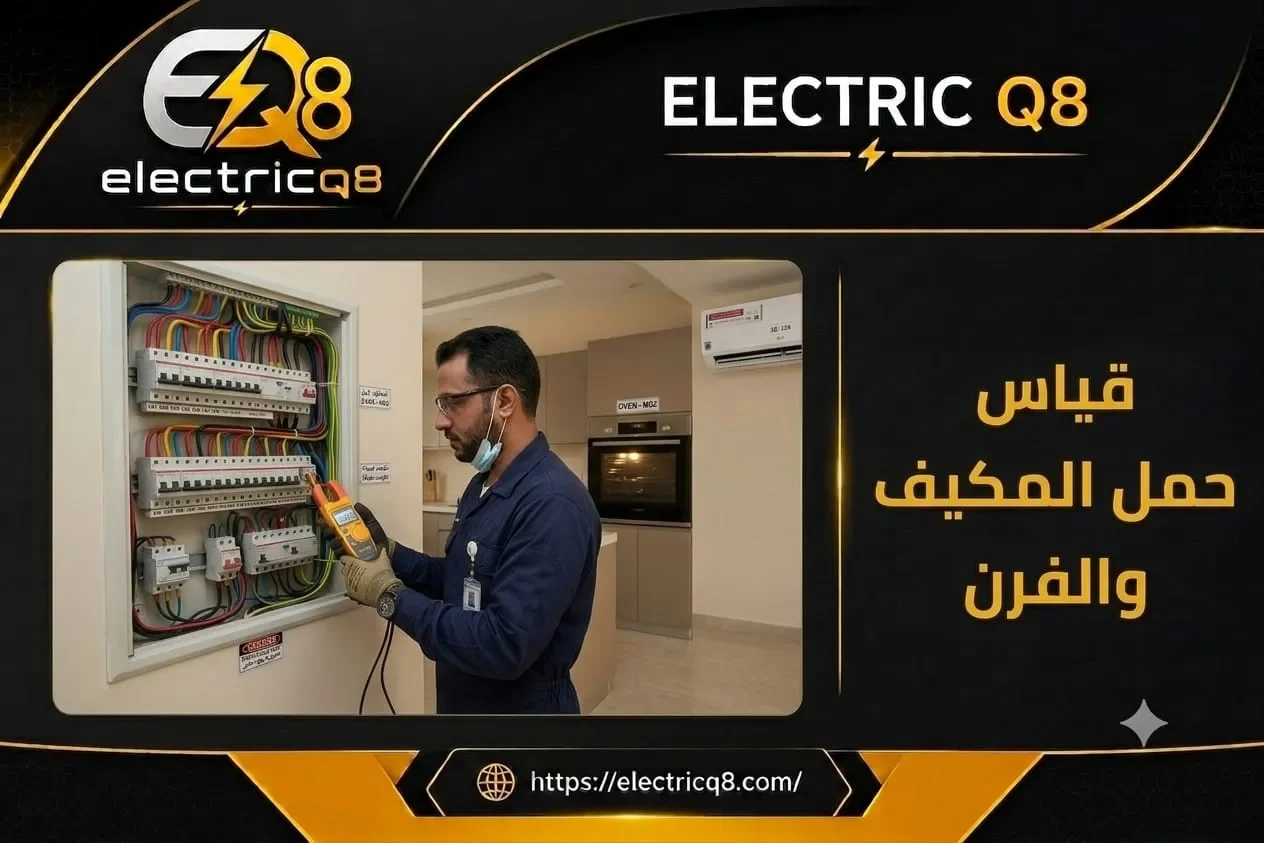
If the RCD trips every time you switch on a particular appliance, do not treat the trip as an inconvenience caused by the protective device and try to bypass it. A repeated connection between one appliance and the RCD tripping provides important diagnostic information that needs to be investigated systematically. The problem may be related to the appliance itself, its cable and plug, the connection point, the circuit supplying it, or an existing leakage condition that becomes more noticeable when that appliance operates. Proper diagnosis therefore does not begin by replacing the RCD or repeatedly testing the appliance. It starts by identifying the tripping pattern and then inspecting the appliance, circuit, and protection with appropriate equipment so the possibilities can be separated and the actual cause found without defeating an important safety function.
RCD Trips When an Appliance Is Switched On

When the RCD trips when an appliance is switched on repeatedly, the timing of the trip becomes one of the most useful diagnostic details. Does the RCD trip immediately when the plug is connected? Does it trip only after pressing the appliance's power button? Or does the appliance operate for a while and then cause a trip when it reaches a particular stage of operation? These situations are not identical because one appliance can contain several electrical components that operate at different stages. Knowing exactly when the problem appears helps the electrician understand when the leakage path may be developing instead of treating the entire appliance as one component and immediately deciding that it must be replaced.
It is also important to establish whether the trip occurs only at the same outlet or follows the appliance under professionally controlled testing where appropriate. This does not mean the homeowner should move a suspected faulty appliance between outlets throughout the property, especially if there has been an electric shock sensation, burning smell, moisture, or visible damage. The purpose is for the technician to distinguish between a fault associated with the appliance and one associated with the circuit or connection point. That distinction should be made through safe diagnosis rather than household trial and error.
At the same time, the RCD should not automatically be considered faulty simply because it trips. The device exists to detect certain leakage conditions, and tripping may mean that it is performing its intended protective function rather than malfunctioning. Replacing or bypassing it before identifying the cause could remove an important warning while leaving the electrical hazard unresolved. A qualified electrician reviews the tripping pattern, appliance, circuit, and protective device and then uses appropriate tests before deciding what needs repair. If the appliance gives an electric shock sensation or there is water nearby, a burning smell, smoke, or sparks, stop using it and avoid touching it when an electrical hazard may be present and arrange urgent qualified assistance.
-
The exact timing of the RCD trip in relation to the appliance's operating stages helps narrow the diagnosis because a trip that occurs when the plug is connected differs from one that appears after a heating element or another internal component begins operating.
-
Repeated tripping with one particular appliance is important evidence but does not by itself prove that the appliance is the final cause because the outlet circuit protective device and operating conditions also need to be included in the inspection.
-
An RCD trip is not sufficient reason to replace or disable the protective device because it may be performing its intended function and bypassing it before locating the leakage source could leave the electrical hazard present without the same protection.
Appliance Trips the RCD
When an appliance trips the RCD every time it operates, the diagnosis needs to separate three issues clearly: the condition of the appliance itself, the condition of the circuit supplying it, and the condition of the protective device. Starting with the assumption that the appliance is defective may lead to repairing or replacing it only to discover that the tripping continues. Assuming that the RCD is simply too sensitive and replacing it without testing can remove the visible symptom without establishing whether genuine electrical leakage exists. Professional diagnosis examines these possibilities in a logical order and supports each decision with appropriate testing.
The behavior of the appliance before the trip also provides useful information. An appliance that trips the RCD immediately after being switched on does not necessarily have the same problem as an appliance that runs for several minutes and trips only when a particular function starts. Many appliances operate through different stages, so recording exactly when the trip occurs is more informative than simply saying that “the appliance trips the electricity.” It is also useful to know whether the problem started after the appliance was moved, serviced, exposed to water, or after visible damage appeared on the cable or plug. These details help direct the inspection but do not replace electrical testing.
If the appliance is fixed, has a significant electrical load, or operates around water, additional caution is required because random experimentation can increase the risk. The homeowner should not dismantle the appliance, disconnect its protective earth, or use an adapter that defeats protection just to see whether it continues running. If the appliance is suspected of electrical leakage, it should remain out of use until it has been appropriately inspected. A good service does not sell an RCD replacement as a quick solution. It determines whether the trip is caused by leakage associated with the appliance, the circuit, or another factor and then repairs the part actually responsible.
-
Observing the operating stage at which the appliance trips the RCD provides more useful information than knowing the appliance type alone because some faults appear immediately while others become evident only when a particular internal component begins operating.
-
A problem that begins after appliance servicing relocation exposure to moisture or visible damage to the cable or plug becomes an important part of the fault history and helps direct the inspection without being treated as final proof of the cause.
-
Disconnecting the protective earth bypassing the RCD or using a connection method that defeats protection to keep the appliance operating is not an acceptable test because stopping the trip in this way does not mean the leakage or electrical danger has disappeared.
Electrical Leakage From a Home Appliance
Electrical leakage from a home appliance means current is taking a path outside its intended operating path, and this condition requires technical assessment, particularly when it is associated with an RCD trip or an electric shock sensation when touching the appliance. Not every internal appliance fault produces the same type of leakage, and not every appliance that trips an RCD has a cause that is obvious from the outside. Sometimes the appliance continues performing its basic function normally while the protective device detects a problem the user cannot see because the appliance still heats, cools, spins, or otherwise appears to operate correctly.
Diagnosis should never rely on touching the appliance body to check whether electricity can be felt or on other unsafe experimental methods. The electrician or appropriate appliance specialist uses suitable testing methods for the equipment and circuit to determine whether an unintended leakage path exists and requires repair. Attention should also be given to the cable, plug, and connection point because the problem is not necessarily buried deep inside the appliance. If the appliance operates around water, visible moisture, water leakage, or an electric shock sensation increases the seriousness of the situation and means the appliance should be taken out of use rather than repeatedly tested.
It is also important to distinguish between appliance repair and circuit repair. If testing confirms that the leakage originates inside the appliance, the work may require an appliance technician with the appropriate expertise for that equipment while the electrician assesses the supply, protection, and circuit within their scope. If the appliance is found to be satisfactory and the problem is associated with the circuit, the repair focus moves to the wiring, connection point, or other area identified through testing. This distinction prevents unnecessary component replacement and keeps the repair based on evidence rather than guesswork.
-
An appliance continuing to perform its normal function does not rule out electrical leakage because a fault involving insulation or an unintended current path may be detected by the protective device before the user notices an obvious operating failure.
-
The presence of an electric shock sensation moisture or water near an appliance changes the priority of the situation because the appliance should be taken out of use and qualified inspection arranged instead of switching it on again to see whether the RCD trips another time.
-
Determining whether leakage originates inside the appliance cable plug connection point or circuit prevents random component replacement and helps establish whether the repair requires an electrician an appliance technician or coordinated work based on the inspection findings.
Protective Breaker Trips With Appliances
When a protective breaker trips with appliances, the first step is identifying which type of protective device is actually operating because many people use the word “breaker” for any switch inside the electrical panel. An RCD trip has a different meaning from the operation of a protective device responding to overcurrent or a short circuit, so identifying the affected device is an essential part of diagnosis. The electrician does not begin with the appliance name alone but looks at what protective device operated, when it happened, and which circuits lost power afterward because this information helps establish the nature of the problem instead of treating every trip as if it had the same cause.
If one RCD protects several circuits, the appliance noticed by the customer may be part of the problem without necessarily being the only contributing factor. There may be leakage associated with more than one item or circuit within the protected group, with the final trip becoming noticeable when another appliance is added to the existing conditions. This situation requires a different diagnostic approach from a case in which one appliance can be clearly linked with the problem. Tracing the affected circuits and appliances therefore provides a more accurate picture than immediately replacing the first appliance that happened to be operating when the trip occurred.
Repeatedly resetting the breaker and switching appliances on one after another at random is not a substitute for professional testing. If there is an insulation fault, an appliance producing an electric shock sensation, moisture, or signs of burning, repeatedly restoring power may expose the user to unnecessary risk. A qualified electrician follows an organized diagnostic process, identifies the circuit scope, and tests the required elements using suitable equipment. If the RCD itself needs evaluation, it should be tested as part of the diagnosis rather than assumed faulty simply because it operates.
-
Identifying the exact type of protective device that trips is essential because an RCD responds to a different condition from protection against overcurrent or short circuits and these events should not all be diagnosed in the same way.
-
When several circuits or appliances are protected by one RCD the appliance that coincides with the trip may be the source of the problem or may be the additional factor that causes an existing leakage condition to reach the operating threshold of the protection.
-
Repeatedly resetting the protective device without identifying the reason for the trip is not professional testing especially when there is an electric shock sensation moisture or a burning smell because safe inspection should then take priority.
Identifying the Appliance Causing the Breaker to Trip

Identifying the appliance causing the breaker to trip requires tracing the relationship between the trip and appliance operation without turning the home into an electrical testing laboratory. The process begins by collecting a clear pattern from the user: which appliances were operating before the trip, which appliance was switched on at the same moment, and whether the problem repeatedly occurs during a particular function such as heating, pumping, or the activation of another internal component. This information gives the electrician a logical sequence for inspection rather than requiring random disconnection and reconnection of every appliance.
The circuit supplying the suspected appliance, the associated protective device, and the other appliances within the same protected group are then considered. If the RCD protects several circuits, the fact that it trips when one particular appliance operates is not enough to establish a final conclusion. The electrician needs to distinguish leakage that follows the appliance from leakage within the circuit and from a combined condition that becomes significant only when several elements operate together. Appropriate testing is what separates these possibilities.
One mistake is for the homeowner to move the suspected appliance between different outlets or use extension leads to see whether the trip happens again. This can spread the potential hazard to another location, particularly if the appliance itself has an insulation problem. It is better to record the conditions surrounding the trip and leave electrical testing to a qualified professional. If the appliance is fixed, connected with water, or produces an electric shock sensation on its casing, it should not be moved or repeatedly switched on simply to confirm the symptom.
-
Identifying the suspected appliance begins with establishing the exact moment and function associated with the trip because an appliance may operate normally for a period and develop leakage only when a particular internal component enters operation.
-
Understanding which appliances and circuits share the same RCD prevents the first appliance associated with the trip from being blamed automatically because the condition may involve combined leakage or another factor that requires diagnostic separation.
-
Moving a suspected appliance between several outlets to reproduce the fault is not a safe diagnostic method when electrical leakage is possible because proper testing should be performed with suitable equipment under the control of a qualified professional.
Detecting Electrical Leakage From Appliances
Detecting electrical leakage from appliances cannot rely on external appearance alone because an appliance may look completely normal and perform its usual function while an insulation problem or internal fault appears only under certain operating conditions. Professional assessment first considers the type of appliance, how it is connected, and the circuit supplying it before selecting an appropriate test rather than applying one testing method to every household appliance.
The cable, plug, cable entry point, and electrical connection are also important parts of the inspection because the defect is not always deep inside the appliance. Repeated bending, visible deterioration, heat marks, or moisture are observations worth noting, but none should be used alone to reach a final conclusion. Some faults also appear only when a particular internal element begins operating, which means the timing of the RCD trip remains useful information even after formal testing begins.
Appliances that use water or operate in damp environments require greater caution. Visible moisture, water leakage, or an electric shock sensation from the appliance body does not need another household experiment to prove that something is wrong. The appliance should remain out of use and be evaluated by the appropriate professional. Detecting leakage does not mean finding any unusual reading and immediately replacing the entire appliance. The aim is to locate the source, determine its relationship to the trip, and identify the component or area that actually requires repair.
-
A normal external appearance does not prove that the internal insulation is sound because some leakage conditions remain invisible to the user and become apparent only through protective device operation or during a particular stage of appliance use.
-
Inspecting the cable plug cable entry and connection point prevents the diagnosis from focusing only on internal appliance components because the leakage source may exist somewhere along the supply path before the internal components are reached.
-
Appliances operating near water require a more cautious response because moisture combined with an electrical leakage sign or shock sensation calls for taking the appliance out of use and arranging professional inspection rather than repeatedly switching it on.
Tracing Current Leakage in the Circuit
Tracing current leakage in the circuit is different from simply looking for a faulty appliance because the objective is to determine which part of the electrical path is associated with the RCD trip. If the RCD continues to trip even after the suspected appliance has been taken out of use, that becomes important diagnostic information and changes the direction of the investigation. Attention then shifts toward the circuit and other connected elements instead of remaining focused on the first appliance.
The electrician identifies the protection scope and the circuits associated with it and then narrows the possibilities using a safe professional process suited to the system design. This does not mean randomly disconnecting wires inside the electrical panel. Appropriate tests are used to reduce the fault area step by step. Depending on the results, the inspection may then move toward connection points, fixed wiring, or permanently connected equipment within the circuit. Each step should produce useful information that reduces the number of possibilities instead of being another uncontrolled experiment.
Intermittent leakage can require more careful investigation because it may appear only under specific conditions such as appliance operation, moisture, or a change in the state of a particular component. If the fault does not appear during the inspection, the electrician should not invent a cause simply because it is commonly seen. The conditions surrounding previous trips should be documented, available tests performed, and the limits of the findings explained to the customer. This transparency is part of good diagnosis because it prevents unnecessary repairs based only on assumptions.
-
Continued RCD tripping after the suspected appliance has been removed from use broadens the diagnostic scope and provides a reason to investigate the circuit and associated elements rather than continuing to replace parts inside the original appliance.
-
Leakage tracing should narrow the problem step by step through appropriate testing rather than random disconnection of wiring or unnecessary breaker replacement because every action should have a clear diagnostic purpose.
-
An intermittent fault should be connected with the conditions under which it occurs and if it cannot be reproduced during inspection the limitations of the diagnosis should be explained instead of presenting an unproven cause as certain.
Testing an Electrical Appliance for Leakage
Testing an electrical appliance for leakage is intended to determine whether the appliance provides an unintended current path under appropriate test conditions rather than simply establishing whether it switches on and works. An appliance can perform its basic function normally while still having an insulation-related problem or another electrical condition. Watching a fan rotate or a heater become warm is therefore not an electrical safety test.
The appropriate testing method depends on the appliance, its design, its connection method, and the conditions under which the RCD trips. A qualified professional uses suitable equipment and understands both the limits of the test and how its results should be interpreted. The same reading does not necessarily have the same meaning for every appliance, so measurements must be considered together with equipment characteristics, protective arrangements, and test conditions. This is also why homeowners should not be given instructions to dismantle an appliance or connect test equipment to energized internal components while searching for leakage.
The test result must then be connected back to the original problem. If a clear fault is found inside the appliance, the appropriate repair can be identified according to the appliance type and the specialist required. If the appliance test results do not adequately explain the RCD trip, diagnosis should return to the circuit and protective system instead of forcing the evidence to fit the original suspicion. The purpose is for each repair decision to have technical support rather than simply proving at any cost that the appliance suspected at the beginning was responsible.
-
Normal appliance operation does not establish electrical safety because leakage testing investigates a condition different from basic functionality and the protective device may detect it before any obvious operating failure appears.
-
Selecting the testing method and interpreting its results depends on appliance type design and operating conditions so one measurement or household test should not be treated as a universal judgment of electrical safety.
-
If appliance testing does not adequately explain the RCD trip the investigation should continue through the circuit and protection instead of replacing the appliance simply because it was the original suspect.
RCD Inspection in Kuwait

Requesting an RCD inspection in Kuwait is appropriate when the protective device repeatedly trips, operates with one particular appliance, or trips for a reason that is not obvious to the user. A proper inspection does not begin with the assumption that the RCD is defective. The electrician first identifies the type of protection, the circuits within its scope, and the tripping behavior before assessing the RCD as part of the complete electrical system. The purpose of an RCD is protection, so repeated operation may be an indication of an electrical problem that needs investigation rather than evidence that the RCD itself has failed.
A qualified electrician distinguishes between testing the protective device and searching for the leakage source. The RCD may genuinely require assessment, but even if a problem with it is confirmed, it remains important to determine whether another issue exists within the appliance or circuit. Replacing the RCD alone without reviewing the reason for previous trips may leave the customer with the same problem or allow another fault to remain undetected.
An accurate repair price also cannot be determined from the statement “the RCD keeps tripping.” Inspection and repair costs depend on the number of circuits involved, the type of appliance, accessibility, the tests required, and whether a component ultimately needs repair or replacement. It is better to compare quotations that clearly define the work scope than to choose a service that promises immediate RCD replacement before any diagnosis has taken place.
-
RCD inspection involves understanding why the device operates within the electrical system rather than only checking whether its operating mechanism moves because the fault may exist in an appliance or circuit while the protective device is functioning correctly.
-
Replacing the RCD before investigating the reason for the trip may result in changing a serviceable component while leaving the leakage source unresolved so the decision should follow assessment of the protection circuit and associated appliance.
-
Service cost varies according to diagnostic scope affected circuits appliances and the repair required after the cause is identified so a final price becomes more meaningful after inspection rather than being guessed from the description alone.
Repairing Electrical Leakage From an Appliance
Repairing electrical leakage from an appliance should begin only after the source of the problem has been established rather than simply because the appliance happened to be operating when the RCD tripped. If testing shows that the leakage is associated with the appliance, the affected area and appropriate repair should be determined according to its design. In some cases, the work may involve the cable, plug, or supply entry point, while in others the fault may be internal and require a technician who specializes in that type of appliance. The important point is that the repair follows the evidence produced by inspection.
After the repair, simply switching the appliance on and seeing it operate is not enough. Appropriate verification should establish that the condition responsible for operating the RCD has been addressed and that protective functions have not been disabled or bypassed to obtain that result. If the repair took place inside the appliance, the safety aspect related to the original fault should be checked before it is returned to use. If the problem was within the circuit, the repaired part should be tested within the scope of the work.
The better service is not the one that returns the appliance to operation in the fastest possible way. It is the one that preserves the protective function and explains to the customer what caused the problem, what was repaired, and what was tested afterward. If the appliance is damaged to an extent that makes a particular repair inappropriate or requires another specialist, that should be explained instead of applying a temporary modification whose only purpose is to keep the appliance running. Trust comes from clear diagnosis, targeted repair, and post-repair verification rather than broad promises that the fault has been permanently eliminated.
-
Appliance leakage repair should target the part that testing has connected with the problem whether that is the cable plug supply entry point or an internal component instead of replacing parts that have no demonstrated relationship with the fault.
-
Repair success is not measured only by the appliance operating again because the cause of the leakage should also be addressed while the RCD protective earthing and other safety functions remain correctly in place.
-
If the fault requires a specialist appliance technician or the damage extends beyond a straightforward electrical repair referring the work to the appropriate expertise is better than applying a temporary modification whose only purpose is to make the appliance run.
Conclusion
When the RCD trips when an appliance is switched on repeatedly, the protective device is providing information that needs investigation rather than creating a problem that should simply be removed. Proper diagnosis starts with the timing of the trip, the appliance associated with it, and the circuit supplying that appliance, followed by appropriate testing to determine whether the leakage originates from the appliance, cable, plug, connection point, or circuit itself. The RCD should not be bypassed, protective earthing should not be disconnected, and the device should not be repeatedly reset simply to keep the appliance operating. If there is an electric shock sensation, moisture, smoke, sparks, or a burning smell, stop using the appliance, avoid touching it when an electrical hazard may be present, and request qualified inspection. A proper repair addresses the leakage source, preserves the protective function, and verifies the result before the appliance is returned to service.
Frequently Asked Questions
Does RCD tripping with one appliance mean the appliance is faulty?
Not necessarily. Repeated tripping associated with one appliance makes that appliance an important part of the diagnosis, but the source may be inside the appliance, in its cable or plug, at the connection point, or within the circuit supplying it. Testing is needed to locate the source instead of reaching a conclusion from timing alone.
Should I replace the RCD if it keeps tripping?
It should not be replaced simply because it trips repeatedly. The RCD may be performing its intended protective function because genuine electrical leakage is present. The RCD, appliance, and circuit should be evaluated first, and if testing confirms that the protective device itself is defective, it can then be addressed according to the findings.
Can I try the appliance in another outlet to find the cause?
If electrical leakage is suspected, particularly when there is an electric shock sensation, moisture, visible damage, or a burning smell, moving the appliance between different outlets is not a good way to test it because the potential hazard may simply be transferred to another point. It is safer to leave the appliance out of use and have it tested professionally.
Can an appliance leak electricity while still working normally?
Yes. An appliance performing its basic function does not prove that its insulation is sound or that there is no unintended leakage path. The appliance may continue operating while the RCD detects a condition that requires inspection before it becomes an obvious operational fault.
What determines the cost of repairing appliance leakage?
The cost depends on where the leakage originates, the type of appliance, the extent of the diagnostic work, whether the fault is inside the appliance or in the cable, plug, or circuit, and which components actually require repair or replacement. Diagnosis therefore provides a more accurate basis for pricing than applying one fixed price to every case of RCD tripping.